Brandeis receives $1 million Carnegie grant to support university’s plan to reinvent the liberal arts

February 26, 2026
Brandeis has received a $1 million, 18-month grant from Carnegie Corporation of New York to support the Brandeis Plan to Reinvent the Liberal Arts and develop a core pillar of the project: a second, competency-based transcript for students.
The grant will enable Brandeis to pilot and test a system of rigorous, externally validated microcredentials that will be embedded within the university’s renowned liberal arts curriculum.
To directly connect the Brandeis liberal arts education to employer-relevant competencies and ultimately to careers, every Brandeis undergraduate student, over the course of achieving their degrees, will have the opportunity to earn specific real-world skills or credentials that will be recorded on a portable and digital second transcript.
“This grant reflects Carnegie's commitment to education as a driver of economic and social mobility. We look forward to the lessons this pilot will offer for institutions working to better connect a rigorous liberal arts education with pathways to opportunity,” said Saskia Levy Thompson, a program director for Education at Carnegie Corporation of New York.
“Brandeis is thrilled Carnegie Corporation of New York has recognized the impact our innovative plan can have on the higher education sector. The learnings from our second transcript initiative will be shared widely,” said Lewis Brooks ‘80 P’16, director of the university’s new Center for Careers and Applied Liberal Arts, which will lead the microcredentialing program and connect it to employers.
The Brandeis Plan, which is being developed and piloted by Brandeis in partnership with ETS, for its assessment expertise, and potential employers, will feature intense career counseling, microcredentialing and experiential learnings, which will be recorded on a competency-based second transcript. The second transcript will demonstrate achieved skills that employers value — from communications and writing skills to human-subject narrative research and artificial intelligence fluency. The pilot will closely embed National Association of Colleges and Employers (NACE)-aligned competencies into the curriculum while bringing a world of learning outside the classroom into the curriculum, verified by rigorous, external assessments.
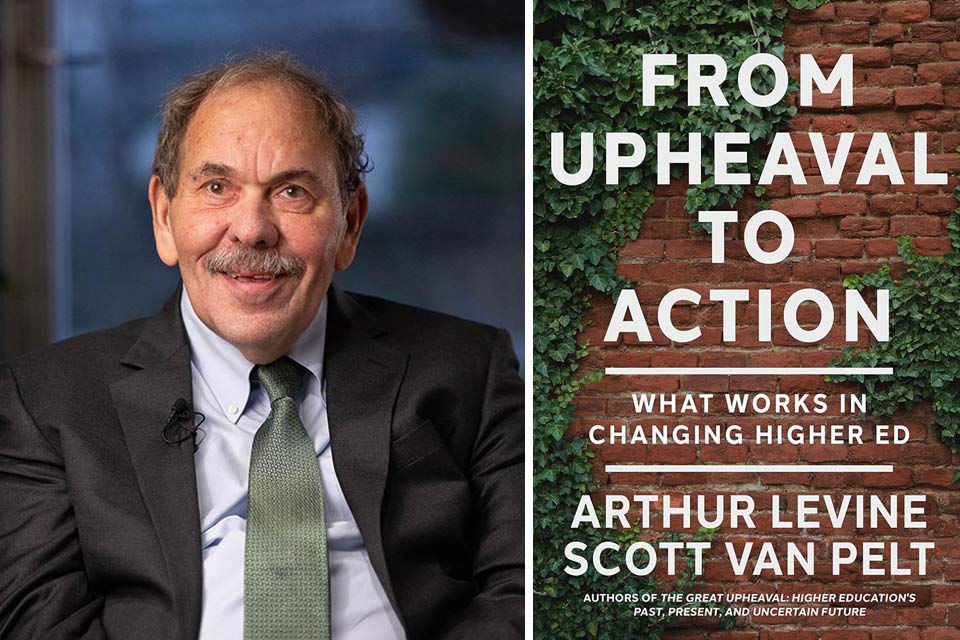
Brandeis President Arthur Levine, who announced the plan last fall, said as higher education faces demographic changes, outdated academic structures, and less confidence in the value of a degree, institutions must embrace the challenge of remaking higher education for the global, digital, knowledge-based economy.
“It’s time to reinvent the liberal arts rather than discarding them, because they’re more essential now than they’ve ever been,” Levine said. “We are so grateful to Carnegie for their support and willingness to embrace Brandeis’ effort to create much needed change in higher education.”
This spring Brandeis began piloting the Brandeis Plan with current students in a rollout of initial micro-credentials and other employer-based initiatives. The full plan will launch in the fall 2026 semester.
Data and materials developed over the course of the pilot and beta test will be published on a project website and shared widely to inform the broader field of competency-based education and higher education sector.