Annual DeisHacks event partners Brandeis students with local groups to work through challenges
By Steve Foskett
Photography by Agbarakwe Chukwuemeka
February 4, 2026
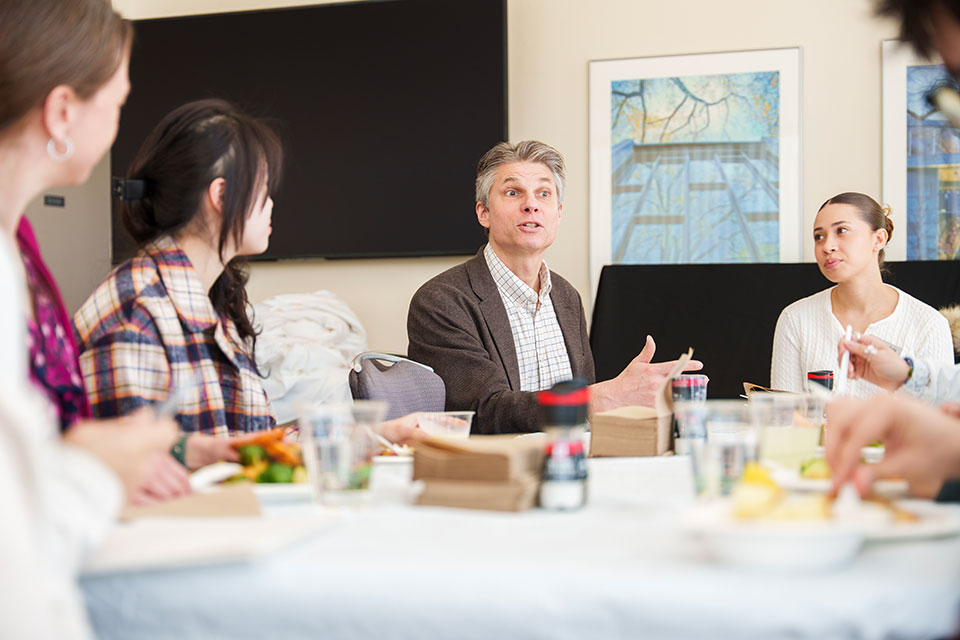
DeisHacks, the long-running social justice hackathon at Brandeis, foregoes cracking codes or developing software prototypes in favor of connecting student innovation with community-based organizations.
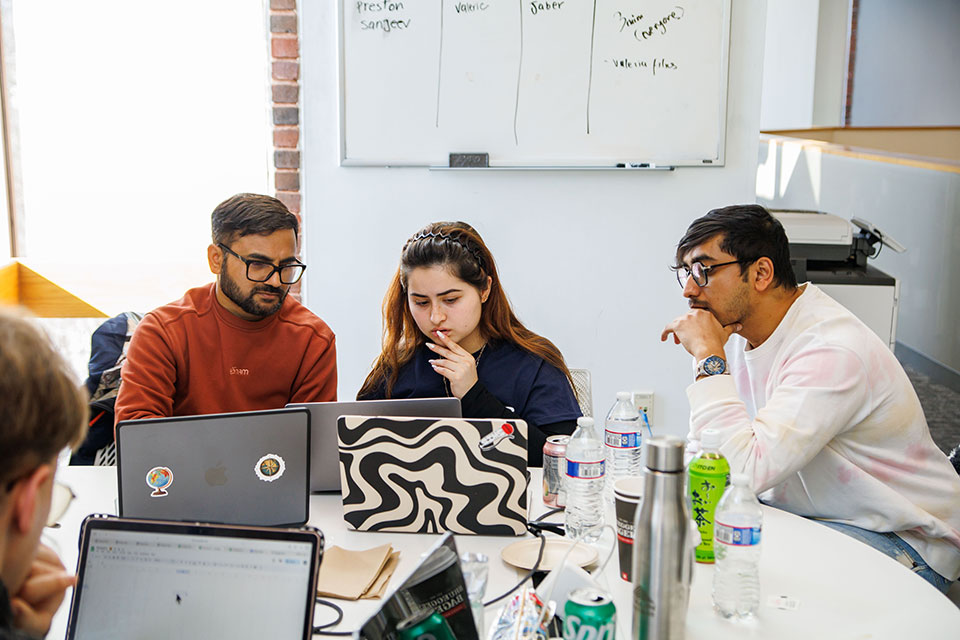
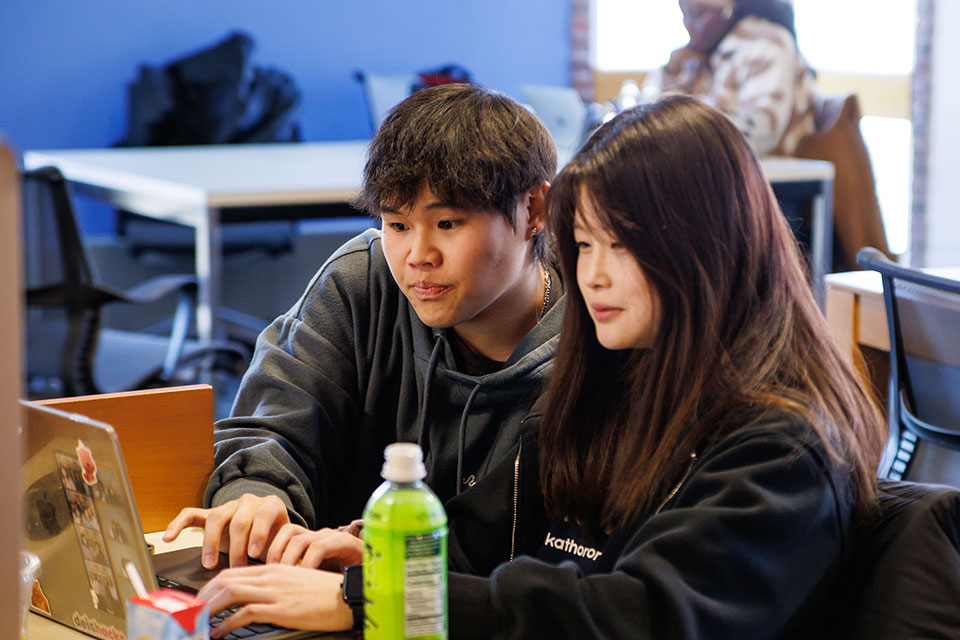
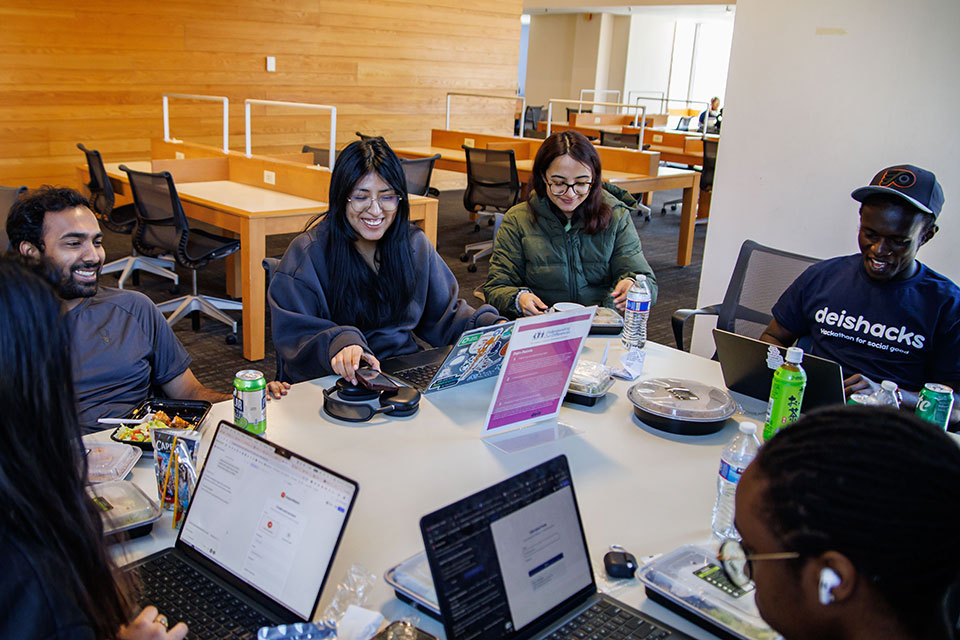
DeisHacks turned loose 143 students into the Waltham area nonprofit sector for the weekend of Jan. 30-Feb. 1 to help develop solutions to pressing problems. Over 48 hours at the Farber Library, they tackled logistical and technical challenges for a local museum, homeless shelters, disability awareness education organizations and more.
What is DeisHacks?
Sponsored by the School of Business and Economics, DeisHacks assigns student teams to collaborate to develop solutions for real-world problems. For the past nine years, it has offered students a chance to make a meaningful difference while gaining hands-on experience in project development and teamwork.
Ian Roy, Executive Director of Design and Innovation and the Robert I. Mallet Senior Lecturer in Engineering and Business, serves as a faculty adviser and co-founder of DeisHacks. The hackathon happens alongside a two-semester class he teaches in which students sit on the same local nonprofit boards to identify hackable challenges and to follow-up after DeisHacks to track implementation. They’re able to see that the skills they’re learning in the classroom can lead to valuable and rewarding opportunities.
“They realize they don’t have to choose between wanting a successful career and making the world a better place. That is a false choice. Our students can and should do both, ” Roy said.
Who was the overall winner this year?
Team Felton Cards designed a privacy-first infrastructure using pseudo-anonymous identification cards to track service use at Community Day Center of Waltham (CDCW), a day shelter and support services organization for adults who are experiencing homelessness.
The team – Dominic Godfrey, Joseph Sosa, Miles Laker, Owen Strasberg and Andrew Oh – developed a system that gives guests a card on entry to the center allowing for instant recording of service use like meals, showers, laundry and hygiene kits. It also includes a “FeltonBucks” system for managing a clothing store at the center.
What challenges did the team have to tackle?
As an organization with intentionally low barriers to entry, CDCW wanted to better track data on how the center is used without sacrificing the privacy of its clients.
“The CDCW provides life-saving care for those in need, but relies on fragmented data like staff memory and paper logs to accumulate the data they need for grant applications and service coordination,” said Dominic Godfrey, a member of the Felton Cards team.
What solution did the team come up with?
The group designed a registration system that runs without any mandatory personally identifiable information. Only the unique identification associated with a card handed to guests is tracked, so guests can avoid the stigma typically associated with this type of care while CDCW gets the data they need.