Brandeis partnering on major new National Science Foundation grant to build AI-literate workforce
January 7, 2026
Brandeis is part of a research institute developing classroom artificial intelligence partners that has recently had its National Science Foundation-funded research grant renewed for another five years.
James Pustejovsky, the TJX Feldberg Professor of Computer Science and of the Volen National Center for Complex Systems at Brandeis, is a co-principal investigator with the NSF National AI Institute for Student-AI Teaming, or NSF iSAT. The institute is being led by the University of Colorado Boulder, and also includes researchers at Boston University, Colorado State University, the University of California Berkley, and Worcester Polytechnic Institute.
Launched in 2020 to explore how classrooms could become more effective and engaging learning environments, the institute developed two AI partners that help student groups learn together by facilitating discussion, exploration and reasoning, in close collaboration with teachers. More than 6,000 middle-school students and educators have benefited from these tools and new AI curricula.
In the next phase of the $20 million grant, NSF iSAT will address the urgent national need to build an AI-ready workforce. It will continue to advance AI support for small group learning in classrooms and co-develop a semester-long curriculum to build AI literacy.
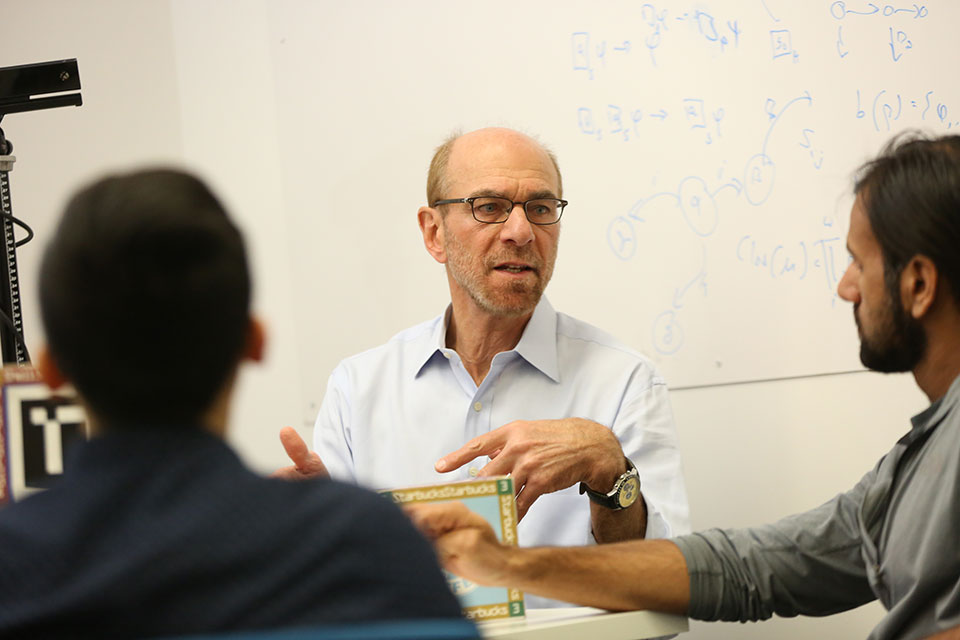
Pustejovsky's laboratory at Brandeis studies multimodal communication — how speech, gesture, gaze, posture and action work together in learning and problem solving. The lab uses those signals to build dynamic models of students’ understanding and shared knowledge, allowing AI systems to reason about group interaction in human-centered ways.
“This research underpins the development of AI partners that support collaboration, meaning-making and broad participation in classrooms,” he said. “These foundations are critical not only for education, but for preparing students to work effectively with AI in the future workforce.”