Top former Washington Post editors decry the influence of billionaires in journalism
By Michelle Gaseau
Photography by Daniel Oren
March 27, 2026
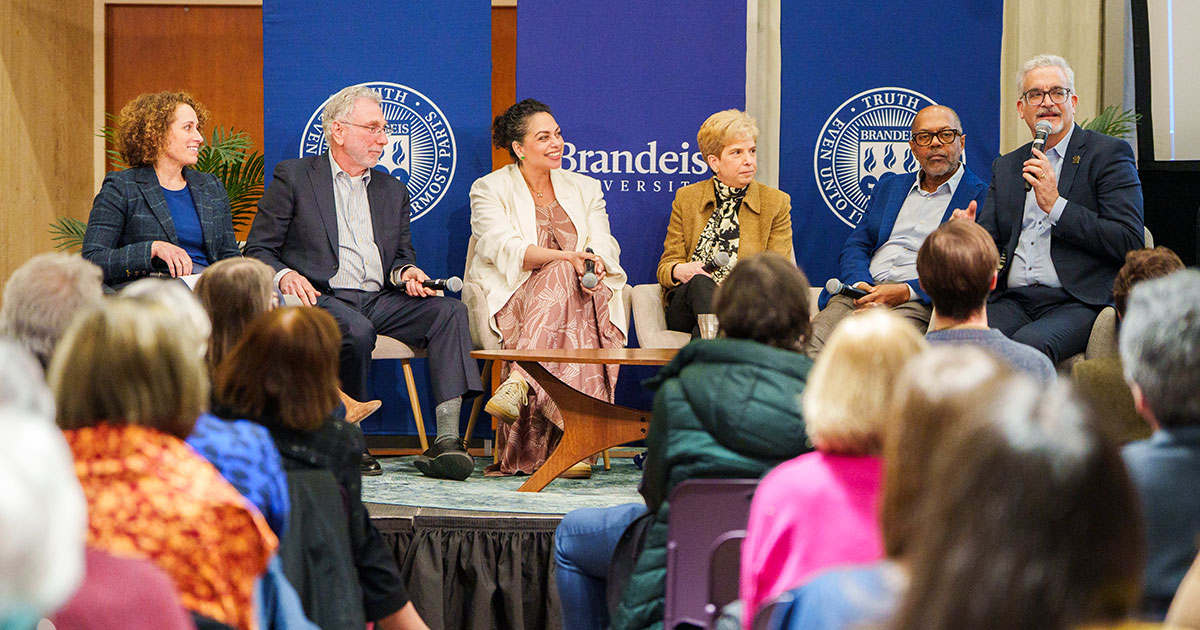
A powerhouse panel of leading American journalists warned about the outsized influence of billionaire owners on the country’s top media outlets, and the potential disappearance of the coverage of the truth, at Brandeis’ annual Carapezza lecture series.
This year’s event featured several former senior Washington Post editors with deep experience at several other top media organizations:
- Marty Baron previously ran the Boston Globe and the Miami Herald.
- Kevin Merida was executive editor of the Los Angeles Times and was a vice president at ESPN.
- Janice Page was a former deputy managing editor at the Boston Globe, and
- Kainaz Amaria was a former senior editor at Vox and NPR.
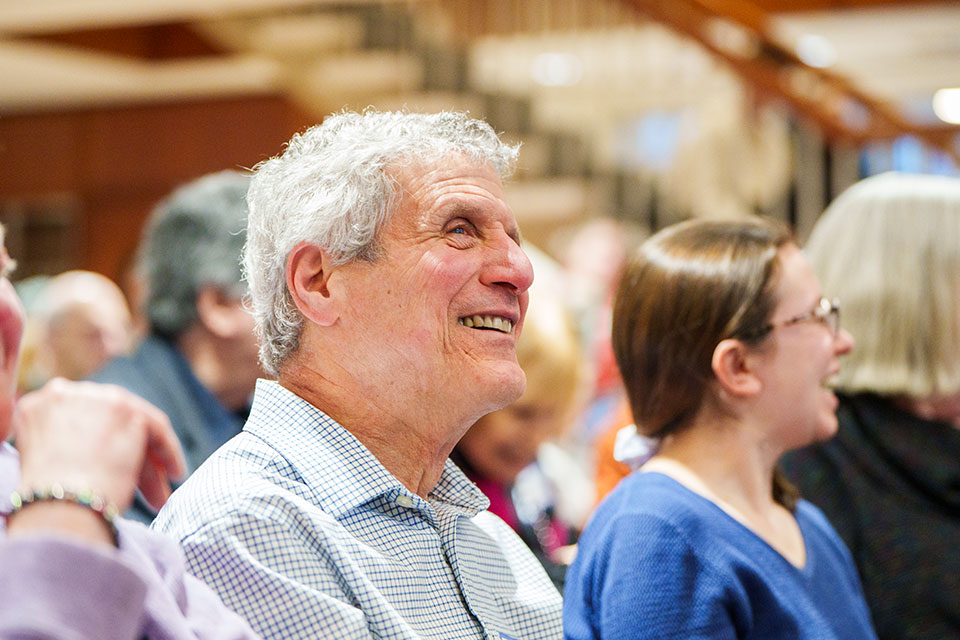
The annual “Brandeis Journalism Presents” forum, funded with support from the family of Dr. Len Carapezza ‘60 (who attended the event) as well as the Cummings Foundation, invites top journalists to campus to discuss important topics impacting the field. The event was moderated by Journalism Program Director Neil Swidey and Professor Ann Silvio. It drew a standing-room-only crowd to Rapaporte Treasure Hall.
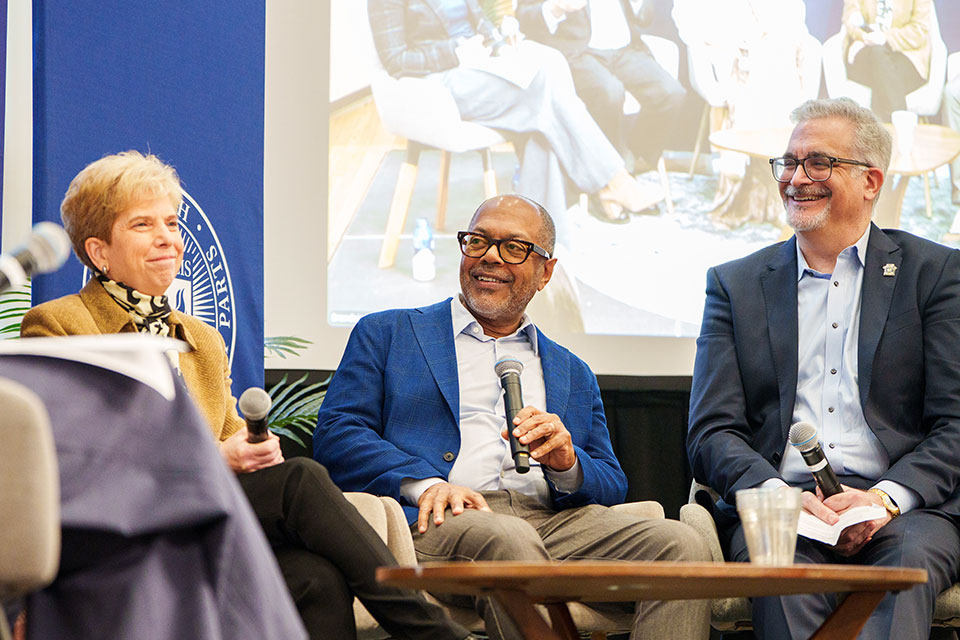
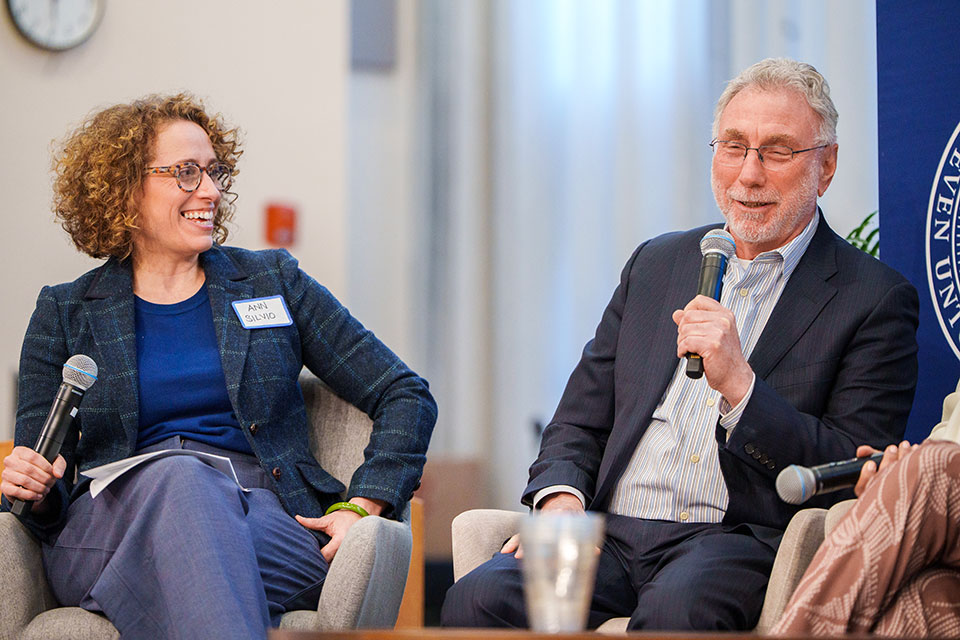
Layered into the discussion was the recent news of the Post’s massive newsroom layoffs in February, which Page and Amaria experienced personally. The arts, metro, sports and international departments were particularly affected by the layoff, which cut well over a third of the newsroom staff. Billionaire and Amazon owner Jeff Bezos has owned the Post since 2013.
“It was difficult to see what was happening to the newsroom and news coverage and the national landscape. My real problem is with decisions that don't take into account the readers and the ecosystem,” said Page, referring to the many theaters and businesses that rely on the coverage of the arts in Washington D.C.
Page and other panelists warned that the recent cuts were brutal, not strategic, and would decrease and color the type of information that the public has access to.
Baron, who was executive editor of the Post under Bezos during the first Trump administration, said Bezos’ perspective changed dramatically after Trump was re-elected in 2024.
“What he did [this time] is the same as what law firms have done, universities have done,” he said, referring to institutions that have altered their ethics and mission in the last year to avoid pressure from the White House. “In authoritarian regimes this is how it begins.”
Baron said that when he was editor during the first Trump administration, Bezos withstood tremendous pressure from the White House, including interference that caused Amazon to lose a $10 billion contract with the Pentagon. Baron said at the time Bezos backed the outlet's mission statement – “Democracy Dies in Darkness” – and invested in newsroom innovations. During Baron’s tenure, the Post won 11 Pulitzer Prizes.
In contrast, in the weeks before the 2024 election, Bezos canceled the Post’s planned endorsement of Democratic nominee Kamala Harris and he greatly narrowed the Post’s editorial page to focus on “personal liberties and free markets.” Amazon then donated significantly to the Trump inauguration and Bezos appeared on stage, and paid handsomely to distribute and market a documentary about First Lady Melania Trump.
The difference between the Bezos he worked for during the first Trump term and the one he sees now, Baron said, is staggering. “Maybe we should have a missing persons poster or something like that to help find [Bezos],” he quipped, “because he has disappeared.”
Merida, who previously served as executive editor of the LA Times under owner and billionaire biotech entrepreneur and surgeon Dr. Patrick Soon-Shiong, suggested that one solution may be to place important news outlets in a trust with public stewardship.
“It’s important [to recognize that journalism] is different from other professions,” he said “It's in the Constitution and if we don't have it, that's not good for larger society." He stressed the critical importance of journalism in holding the government and other powerful interests to account, noting its commitment to transparency. “There are not many [professions] that do their work in public.”
Merida added that because of this distinction, journalists and media outlets have an increased need to be hyper-aware of their audiences and standing.
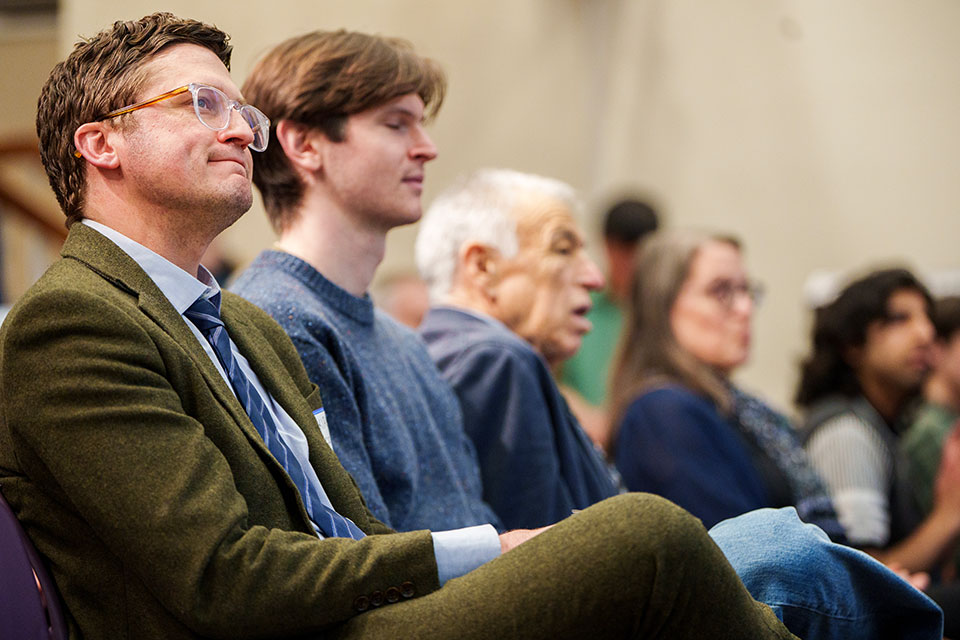
As the conversation turned to questions from Brandeis journalism students about the future of the media, the panelists discussed major changes to how audiences receive information today and how that information is created.
Amaria noted that “today everyone is a publisher and a producer,” which can lead to some very interesting local news coverage. The panel referenced several hyper local initiatives and success of civic journalism, including LA Taco - which broke stories about ICE raids in Los Angeles.
Amaria added that it’s important for today’s journalists and outlets to “be willing to adapt and change and understand the pillars and values of journalism.”
In terms of generative artificial intelligence, the panelists raised concerns about the limitations of the technology and warned about leaning on the product to replace journalists. One example they shared was a failed podcast at the Washington Post that was designed to summarize the news of the day. Unfortunately, the AI “hosts” behind the podcast regularly misquoted the sources in the Post’s own stories.
“It is all so absurd, when you put a product out that mangles the work journalists do,” Amaria said.
Ultimately, the panelists agreed that for journalism and trust in their work to be preserved, the owners of these enterprises need to value the tenets of the profession and have integrity.
“In any field the person in charge has to have integrity, “ said Baron. “People who join a news organization need to look at what their ethics are. Any institution has a right to set down the standards. If folks don’t agree with them, then they don't have to work there.”