To Russia, with Freeze

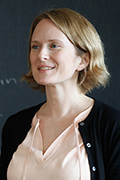
Gregory Freeze is the Victor and Gwendolyn Beinfield Professor of History and an expert in modern Russian history. He is currently completing a volume on the conflict between Bolsheviks and believers in the early Soviet period. Freeze holds a Ph.D. from Columbia University.

Message from the Dean

gregory freezeI am delighted that you have taken an interest in the Graduate School of Arts and Sciences at Brandeis, and would very much encourage you to give serious consideration to applying to become part of our community. To judge from past experience and statements by our students, there are many reasons why they chose to come to Brandeis, but some are particularly compelling.

The first is the university's identity as a small research university, one that combines an emphasis on both research and teaching. The research speaks for itself; a review of the faculty guide, listing the tremendous volume and originality of research, is, in itself, compelling. Naturally, each graduate program has its own emphasis, but the odds are good that you will find someone pursuing the kind of research that interests you most.

At the same time, Brandeis is small — fewer than 800 graduate students in some 29 master's and 19 doctoral programs. It is not a factory; with relatively few graduate students, faculty have the time to mentor, to provide professional and scholarly guidance, to help shape important and innovate research projects and to ensure that our students come away with a first-rate knowledge of their field.

I should add that smallness and interaction promotes interdisciplinarity. Both faculty and graduate students increasingly cross traditional disciplinary boundaries to pose new questions, develop new methodologies and borrow concepts and theories, and thereby produce truly original, path-breaking scholarship. The graduate school, and individual departments, place a high value on interdisciplinarity and strongly encourage curricular and extracurricular activities that will stimulate serious interdisciplinary training and research.

Brandeis also puts a premium on teaching. The faculty members are themselves highly motivated and dedicated teachers, and mentoring their doctoral students is a fundamental responsibility. We think teaching is so important it is a standard degree requirement; every doctoral student, regardless of discipline, must do some teaching and have the opportunity to improve classroom skills. And these skills are of value beyond the classroom. Even students who choose nonacademic careers will find that these teaching skills — leading discussions and effective communication — are transferrable and valuable regardless of the career that one finally chooses.

While the merits of a particular graduate program are of primary importance, it is worth emphasizing that Brandeis offers a host of other resources and advantages. In addition to the Graduate School of Arts and Sciences, Brandeis is home to two other first-tier graduate schools, the Heller School for Social Policy and Management (about 400 students in three master's and one doctoral program) and the International Business School (with 350 students in three master's and one doctoral program). Altogether, that makes about 1,500 graduate students — nearly half the size of the undergraduate population and an exceptionally high proportion of graduate students to undergraduates.

Brandeis' location, in metropolitan Boston, is another enormous advantage. It means that, in addition to Brandeis' own resources, it is possible to establish ties with faculty and graduate students at a number of other universities in the area — to access the extraordinary number of lectures, workshops and seminars that occur throughout the area. It is also possible, through the consortium of Boston universities to enroll in courses at Tufts University, Boston College, Boston University, Hebrew College and the Graduate Consortium in Women's Studies at Radcliffe College.

And, of course, Boston is famous for its cultural riches — museums, concert halls and many other sites, some of which are in fact on the Brandeis campus. The Rose Art Museum includes daring exhibits by outstanding contemporary artists, as well as significant works from our permanent collection. This year, the Brandeis Concert Season celebrates 25 years of musical excellence by the renowned Lydian String Quartet. Our World Music Series illuminates global cultures, while our new Marquee Series showcases Boston's finest composers, musicians and singers at the Slosberg Music Center. The Brandeis Theater Company, which made its debut in 2005-06, presents a five-play season of cutting-edge productions featuring professional actors and students at the Spingold Theater Center.

Brandeis, as you can see, is an exciting, multifaceted center for scholarship, teaching and learning. Please browse this Web site for further information on the Graduate School and the university. If you have any questions, contact us and we shall respond promptly.

Gregory L. Freeze
Dean, Graduate School of Arts and Sciences