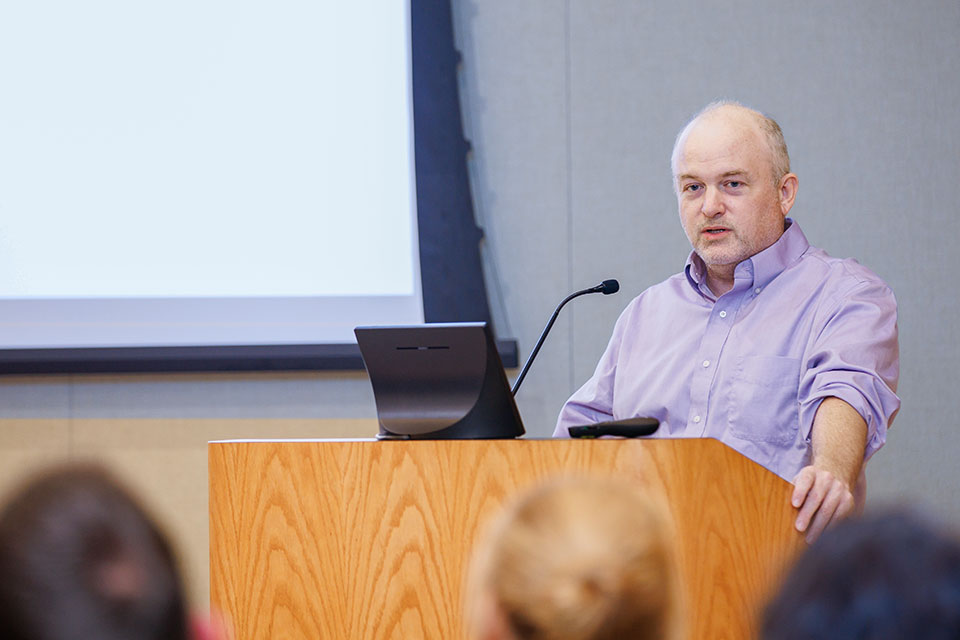
President Arthur Levine
 Arthur Levine has dedicated his career to advancing higher education and building institutions so that they might fulfill their mission and benefit society.
As a leader and researcher, he is a nationally sought expert on addressing the challenges facing colleges and universities.
Message from President Arthur Levine
A Brandeis Education
Brandeis is one of the world’s great universities with a preeminent faculty, an excellent student body, and a talented and dedicated staff. But four things make Brandeis unique.
- Brandeis is an institution that joins an outstanding liberal arts college with an eminent research university in a manner that enhances the quality of both. This is a rare achievement. Typically, one dominates, generally the research university, and determines the institution’s character and priorities. In this sense, Brandeis is a unicorn, at once a college and a research university; the integrity of both is sustained, and each enriches the other. Both undergraduate and graduate students are nurtured.
- Brandeis, a nonsectarian institution established by the Jewish community, is imbued with the values of its founders — a love of learning, a dedication to academic excellence, an antipathy to hate and discrimination, and a commitment to repairing the world through social justice and social action. Beginning with the name of the university, these values are communicated to every Brandeis student inside and outside the classroom through the university’s teaching, research, public service, and the community fostered on campus.
- Brandeis is a trailblazer, intellectually and socially. This has been true since its inception as an elite university for those discriminated against by traditional higher education, and it continues today. This spirit suffuses the campus. It’s attracted renowned scholars and promising academics early in their careers to the Brandeis faculty. They have produced leading-edge research, prepared succeeding generations of leaders, and garnered the most prestigious awards the academy grants. From the very first graduating class in 1952, known as “the pioneers,” this environment has attracted students who want to study with society’s greatest and most innovative minds. They taught Brandeis students how to think critically, creatively, ethically, and out of the box.
- Brandeis is a warm, welcoming, and engaging community. I am the first president to have received my undergraduate degree from the college. The people I met at Brandeis remain my closest friends today. They introduced me to my wife, Linda Fentiman, and we raised a family together. And, though a biology major, I fell in love with the field of higher education at Brandeis, which became a passion and my career.
I believe these four attributes — the university’s structure and balance, the values that define the university, its path-blazing history and commitment to social justice, and its warmth and welcoming ethos are the reasons students and alumni so treasure their Brandeis experience. They receive an education no other college has the capacity to provide.
Best,
Arthur Levine