Summer Institute 2026 Faculty
Partial list
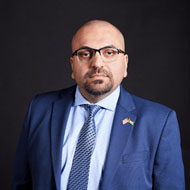 Ahmed Fouad Alkhatib leads Realign For Palestine, an Atlantic Council project that challenges entrenched narratives in the Israel and Palestine discourse and develops a new policy framework for rejuvenated pro-Palestine advocacy. Realign For Palestine aims to cultivate a new generation of Palestinian voices committed to a two-nation solution, nonviolence, and radical pragmatism.
Alkhatib serves as a senior fellow with the Atlantic Council’s Middle East programs, where he writes extensively on Gaza’s political and humanitarian affairs, is an outspoken critic of Hamas, and promotes a radically pragmatic approach to peace and Palestinian statehood as the only path forward between Palestinians and Israelis. His writing and opinions have been published and featured across the US, Israeli, and international press, and his views are prominently featured across social media platforms. Alkhatib holds a bachelor’s degree in business administration and a master’s degree in intelligence and national security studies. He grew up in Gaza City and left Gaza in 2005 to attend college in the United States as an exchange student. Much of Ahmed’s experience is influenced by having grown up in Gaza during the Oslo peace process—and during the difficulties resulting from Oslo's failure—and the rise of Hamas and Islamism in Gaza.
Since the October 7 massacre, Alkhatib’s life has been deeply impacted by the loss of thirty-three of his immediate and extended family members, who were killed by three different Israeli airstrikes. Still, he aims to play a part in breaking the cycle of dehumanization and defying the cycle of hatred, incitement, violence, and revenge.
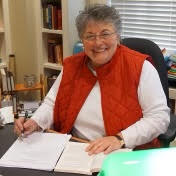 Dr. Rosann M Catalano holds a Doctor of Philosophy in Systematic Theology from the University of St. Michael's College, Toronto, where she focused her doctoral work on the theology of God and the poetry of suffering in the Book of Psalms. She also holds a Master of Arts in Theology and Biblical Studies from the University of St. Michael's College, Toronto, and a Bachelor of Arts in Theology and Philosophy from Loyola University, Baltimore, MD.
Since 2009, Dr. Catalano has served as an independent scholar and educator, teaching Hebrew Bible and New Testament at Beth El and Chizuk Amuno Congregations in Baltimore.
Between 1994 and 2017, Dr. Catalano served as the scholar of Roman Catholic Christianity at the Institute for Islamic, Christian, and Jewish Studies in Baltimore, MD, and as Associate Director and Director of Programs.
Dr. Catalano has also served as Assistant Professor of Systematic Theology at St. Mary's Seminary & University, Baltimore, MD, from 1980 to 1991, as well as Adjunct Professor of Theology at Notre Dame University of Maryland and at The Ecumenical Institute, St. Mary’s Seminary & University.
Dr. Catalano’s ongoing research focuses on the complex relationship between prayer and suffering and on the dynamic interplay between emerging Christianity and rabbinic Judaism in the first centuries of the Common Era.
Dr. Catalano is the author of several publications and lectures widely to Protestant, Jewish, and Catholic audiences on various biblical, theological, and interfaith topics. She has also written on the dynamic relationship between suffering and prayer, the origins of rabbinic Judaism and Christianity, and the partings of their ways. She is a frequent Weekend Scholar-in-Residence and retreat director.
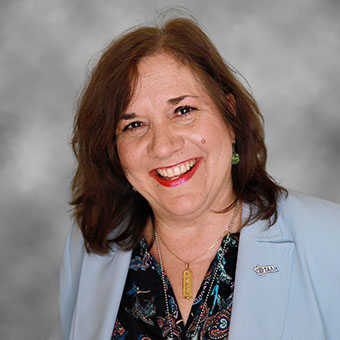 Miriam F. Elman is executive director of the Academic Engagement Network, Inc. (AEN). In this role, she works to build and mobilize nationwide networks of university faculty and administrators to counter antisemitism, advance robust education about Israel, and promote the academy’s principles of open inquiry and free expression. Before taking on her position at AEN in 2019, Dr. Elman was a tenured Associate Professor of Political Science at Syracuse University, where she held the title of Robert D. McClure Professor of Teaching Excellence in the Maxwell School of Citizenship & Public Affairs. An alumna of Hebrew University of Jerusalem (BA) and Columbia University (M.Phil., Ph.D.), she previously taught at Arizona State University and was a Fellow at Harvard University’s Belfer Center for Science and International Affairs. Dr. Elman is an award-winning scholar and teacher, has edited and co-edited seven books, and is the author of nearly 100 peer-reviewed articles and essays. In recognition of her work, she has been recognized recently by The Algemeiner among the top 100 people worldwide who are positively influencing Jewish life. Dr. Elman lives with her family in Fayetteville, NY and serves on the Board of Directors of the Jewish Federation of Central New York, where she chairs its Community Relations Committee.
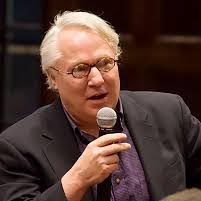 Christopher M. Leighton is the founding director of the Institute for Christian & Jewish Studies (Baltimore, Maryland) where he served for thirty-three years. Over the course of his tenure, the ICJS provided an educational forum where scholars, clergy, and lay leaders explored the complex interplay of Christians, Jews and Muslims, with particular attention to dialogical inquiries that confront the differences and distortions that have pitted our religious communities against one another. He co-edited Talking About Genesis, the study guide for Bill Moyers’ Genesis series. He worked closely with the Jewish scholars who crafted Dabru Emet: A Jewish Statement on Christians and Christianity, and the companion works Christianity in Jewish Terms and Irreconcilable Differences. During 2010-2012, he worked with the Institute for Theological Inquiry on a project examining the relationship between religion and violence, and his essay on Cain and Abel is published in Plowshares into Swords? He is the author of the recent book, A Sacred Argument: Dispatches from the Christian, Jewish and Muslim Encounter published by Wipf & Stock in 2024.
He is a graduate of Princeton Theological Seminary and did his doctoral work in Philosophy and Education at Columbia University—Teachers College. He was awarded a Klingenstein Fellowship at Columbia. He is the recipient of Loyola College’s the Andrew White Award, and was awarded an honorary doctorate by St. Mary’s Seminary and University.
 Rebecca Russo is vice president of higher education strategy at Interfaith America. She oversees IA’s higher education strategy and programs, supporting universities to become laboratories where students can deepen and challenge their own worldviews and collaborate across divides. Rebecca has worked at IA for a decade and was previously Director of Engagement at Northwestern Hillel and Executive Director of the Campus Climate Initiative at Hillel International. Rebecca has written on pluralism in outlets including the Journal of College and Character, Religion News Service, Times Higher Education, and USA Today. Rebecca holds a BA in Middle East Studies from Brown University and an MBA from Northwestern University’s Kellogg School of Management.
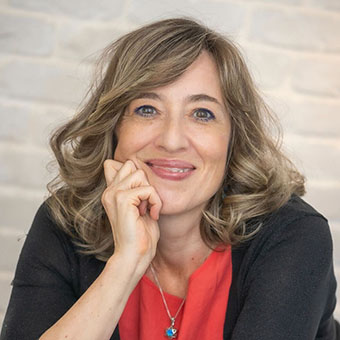 Izabella Tabarovsky is a scholar of Soviet antizionism and contemporary antisemitism, the author of Be a Refusenik: A Jewish Student’s Survival Guide, and a sought-after speaker and lecturer.
She is a fellow with the Woodrow Wilson International Center for Scholars in Washington, DC; senior fellow with the Z3 Institute for Jewish Priorities in Palo Alto; and a fellow with the London Centre for the Study of Contemporary Antisemitism and the Comper Center for the Study of Antisemitism and Racism at the University of Haifa.
A contributing writer at Tablet, she has also published in Newsweek, Sapir, Quillette, The National Interest, Fathom, The Forward, and the Jewish Telegraphic Agency. Her essays have appeared in several edited volumes, including October 7: The Wars over Words and Deeds (Academic Studies Press); The Rebirth of Antisemitism in the 21st Century: From the Academic Boycott Campaign into the Mainstream (Routledge); Mapping the New Left Antisemitism: The Fathom Essays(Routledge); Sionismo y antisionismo: Un debate necesario (RiL editores); and Jewish Priorities: Sixty-Five Proposals for the Future of Our People (Wicked Son). Her work has been translated into Spanish, French, Portuguese, German, Polish, Russian, Czech, and other languages.