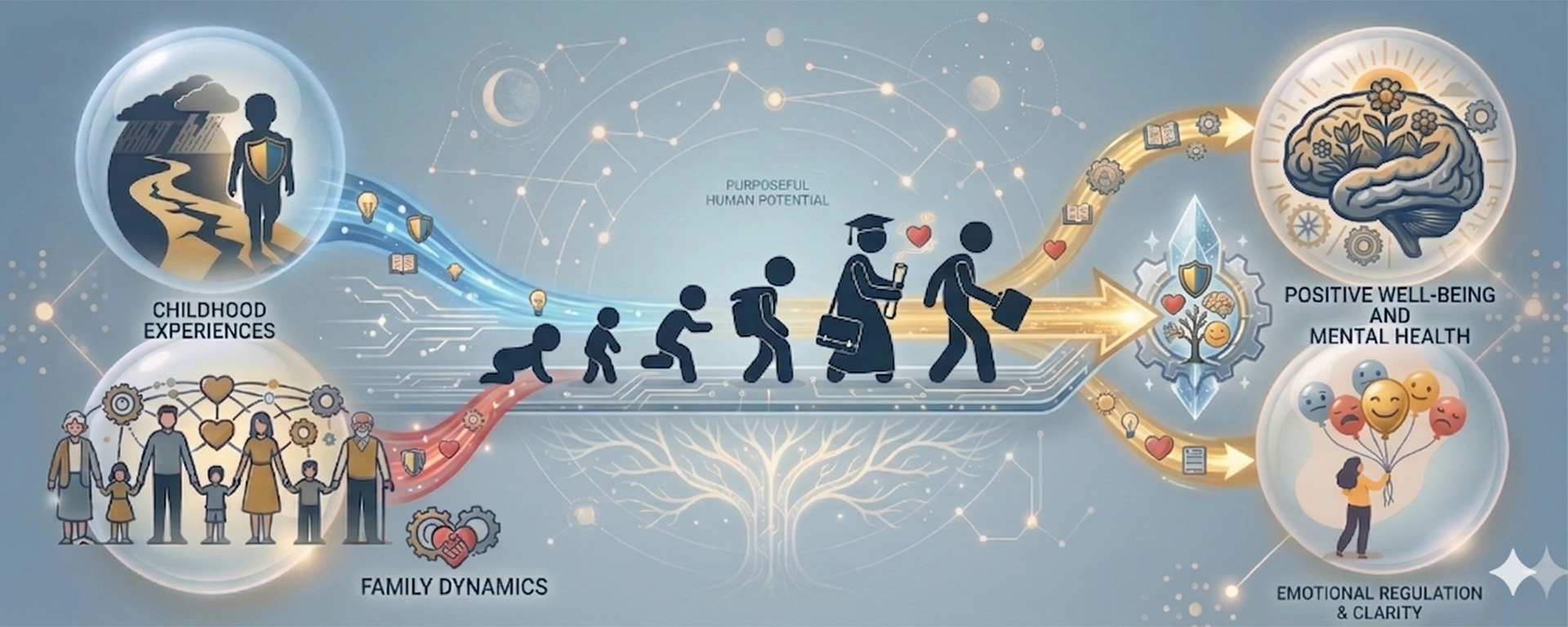
 The Child, Adolescent, and Adult Research on Development (CAARD) Lab brings together faculty whose work examines how individuals develop across the lifespan, with a particular focus on how social, cultural, and psychological processes shape well-being in the context of risk and resilience.
Using interdisciplinary approaches that integrate developmental psychology, clinical science, cultural perspectives, and advanced quantitative methods, the lab investigates how early experiences, family relationships, and regulatory processes influence mental health and adjustment from childhood through emerging adulthood.
Research
Research in the lab examines the mechanisms through which adversity and contextual influences shape developmental outcomes.
- Professor Hannah Clark’s work focuses on families affected by adversity, identifying transdiagnostic and disorder-specific processes that link early adverse experiences to psychopathology across the lifespan, with the goal of improving intervention strategies.
- Professor Ellen Wright investigates developmental predictors of emotion regulation and self-focused attention — such as rumination, reflection, mindfulness, and distraction — and how these processes relate to depression, anxiety, and responses to trauma.
- Professor Amanda Faherty studies parenting practices and parent–emerging adult relationships, examining how cultural and socio-contextual factors influence emerging adult well-being and adjustment.
- Complementing these substantive areas of research, Professor Xiaodong Liu contributes expertise in applied statistics and developmental research methodology, advancing the modeling approaches used to study developmental processes.
Lab Members
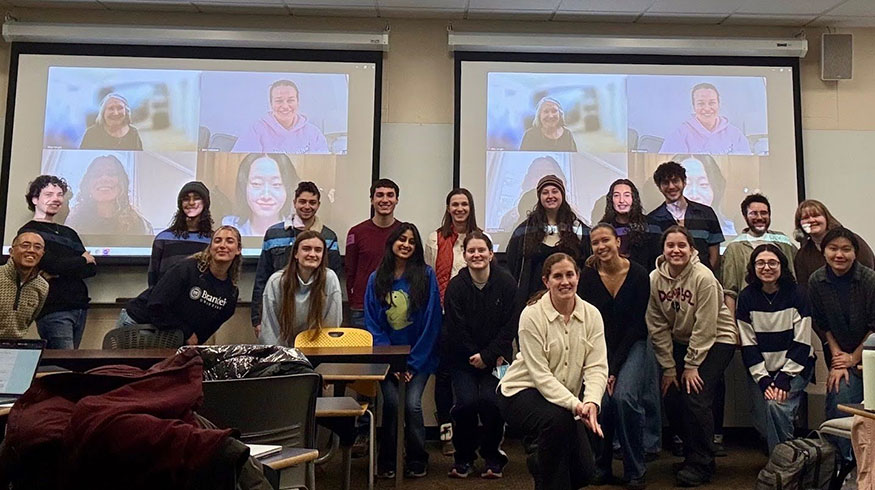
Our lab consists of four faculty members and 15-20 graduate and undergraduate students. Graduate students complete projects for their master's theses. Undergraduate students participate as research assistants on other members' projects and/or as honors researchers completing senior honors projects and independent studies.
Together, the CAARD Lab aims to deepen understanding of the developmental pathways linking family relationships, cultural contexts, and psychological processes to mental health and well-being across the lifespan, while advancing methodological tools to study these complex dynamics.