Call for syllabi and assignments

Dear Members of the Brandeis Faculty,

Do you ask undergraduate students to demonstrate, in a specific way, that they have "a significant knowledge of the cross-cultural dimensions of at least one major international or global issue or development"?

If so, the Assessment Committee's sub-committee on global learning goals would like your help. We would like to determine how often we already ask students to demonstrate this skill.  We would also like to identify faculty members who might be interested in working with the sub-committee to sharpen our assessment of this goal across the curriculum.

By "major international or global issue or development" we mean both contemporary and historical, local/regional and global. Such issues might include:

* Endemic poverty
* Literary modernism
* Business ethics
* Britain in the world
* Feminism
* Climate and environmental change
* The Vietnam War

Please note that we are not simply looking for courses that touch generally upon these topics.  Rather, we are looking for courses that include specific assignments that ask students to synthesize material on major international issues or topics and show an ability to draw on sources from different cultural origins. By collecting syllabi and assignments that ask students to demonstrate their learning of such issues, we will better understand how this goal is already being met, and being assessed, in existing courses. We will then work with faculty to compare assignments across disciplines, or in some cases to create new assignments.  We will NOT be publishing or distributing these syllabi and assignments, except among our committee.

Please submit syllabi and/or assignments to oga@brandeis.edu by Wednesday, October 27, 2010.

Sub-Committee on Global Learning

The Sub-Committee on Global Learning is part of the larger Brandeis Assessment initiative that developed, and is currently implementing, the Brandeis Learning Goals.

This web page details the work of the sub-committee, currently in progress. We invite the University community to comment on the draft goals and the ideas below by sending an email to oga@brandeis.edu

Charge:

The sub-committee is charged with developing learning goals and framework for "global competency" across the Brandeis undergraduate experience -- expanding upon, and integrated with, the overall Brandeis learning goals mentioned above. The committee may also recommend needs for assessing and implementing these global learning goals.

The global learning goals are not intended to replace any of the overall learning goals -- rather, they seek to identify a sub-set of goals specific to global and intercultural learning. As with the general goals, we will work with individual departments and faculty to develop these ideas in the context of particular fields.

Committee Members 2010 - 11:

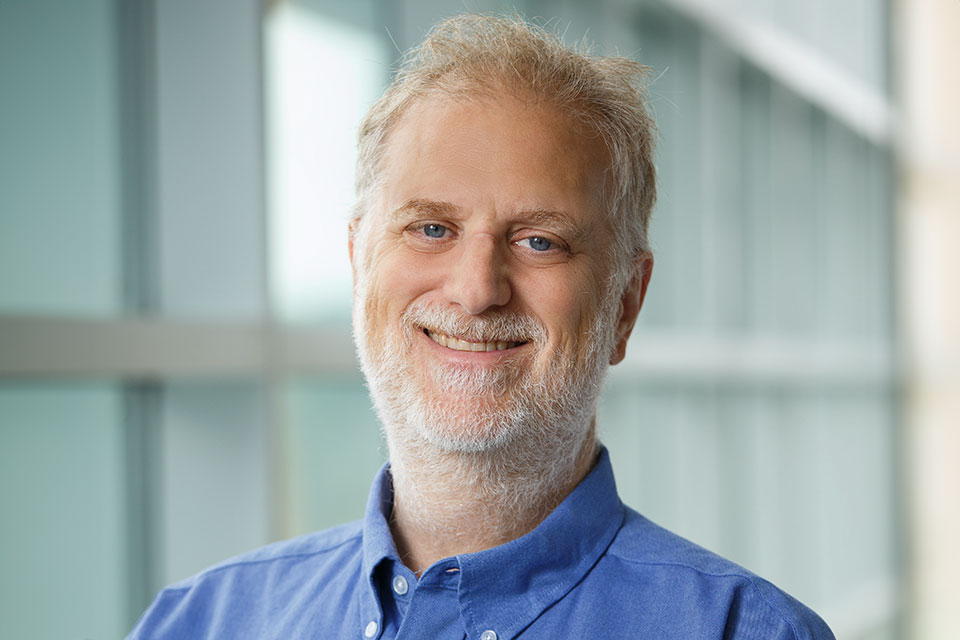
Chair: Daniel Terris (staff/faculty, Office of Global Affairs/Ethics)
Rebecca Bachman '13 (undergraduate student)
Audra Grady (staff, experiential learning/Dean’s office)
Alyssa Grinberg (staff, Justice Brandeis Semester/Brandeis in The Hague)
Bryan McAllister-Grande (staff, Office of Global Affairs)
Kate Moran (faculty, Philosophy)
Vardit Ringvald (faculty, NEJS)
Chandler Rosenberger (faculty, IGS/Sociology)
J. Scott Van Der Meid (staff, Study Abroad)

Previous contributor: Sandhya Narayanan '10 (undergraduate student, now graduated)

Initial meetings

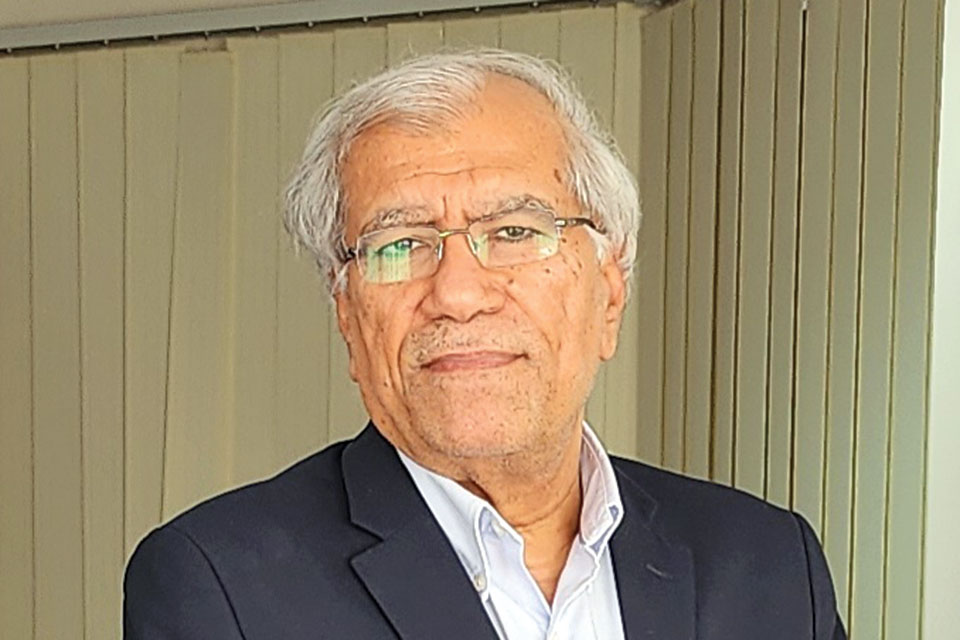
Darla DeardorffThe committee met four times in the spring semester 2010. One of these meetings included a visit by Darla Deardorff, a nationally-recognized expert on global and intercultural competence, as part of the 3rd Global Brandeis Symposium (see picture, right). The visit by Dr. Deardorff was extremely helpful in shaping our thinking about the relationship between "global" and "intercultural" learning.

At our initial meetings, we discussed the desirability of fleshing out the new university-wide learning goals, with the idea of developing more detailed language and assessment advice that could guide faculty and students with regard to global learning specifically.

At the same time, committee members emphasized that it does not make sense to create these ideas in the abstract -- that they should take account of our existing courses, strengths, and character.  In other words, in creating global learning goals we should build from strength, but we should also not be complacent about what the gaps and imperfections in our current offerings may be.

During these initial meetings, the committee agreed that Brandeis already has a strong commitment to global learning, and that many courses and departments treat it in depth. However, we also agreed that we are not always explicit in what we expect from a cross-section of undergraduates before they move on from Brandeis. In individual departments -- for example, anthropology -- global and intercultural learning is probably well defined. But for other students in less obvious majors it can sometimes be an after-thought. Specifically, the committee agreed that we rarely ask students to synthesize and demonstrate their learning across fields.

The committee was adamant, however, that global and intercultural learning at Brandeis is not just a buzz-word, and that the phrases "global citizenship" or "global competency" are sometimes tossed around in higher education without much depth and inquiry behind them. The committee did not want to impose an all-encompassing definition of global learning, and we wanted to craft a plan that allowed for helping to guide individual faculty and departments to definitions and assessment tools that made intellectual sense for that field.

Another topic that was discussed was the relationship between the "global" and the "intercultural," and similarly between the experiential and more traditionally academic forms of global learning. Does learning, in this case, mean "understanding?"  Are there elements of empathy and emotion that come into play in global learning that do not always get discussed elsewhere?  The committee did not come up with a firm decision on this topic, but we decided to define global learning at Brandeis in a very Brandeisian way: it is both "global" AND "intercultural."  One of our goals, mentioned below, specifically addresses the experiential aspects.

Current Working Document

Below is the current draft of the global learning goals. It should be noted again that this is a draft, to be further improved and refined. We welcome feedback on these goals at oga@brandeis.edu

Intercultural and Global Learning at Brandeis University

The Brandeis Learning Goals provide a framework for understanding the core skills, knowledge, and commitment to social justice that the University expects its graduates to acquire. A commitment to global and intercultural understanding is a crucial element of achieving those Learning Goals.

Intercultural and Global Learning can be broadly defined as:

  • The study of cultures including beliefs, values, and languages
  • The study of how cultural norms and cultural flows have shaped human behavior, knowledge and institutions over time (i.e. "the difference that difference makes")
  • The study of significant global issues in historical and contemporary perspective
  • The mastery of skills and discipline needed to be a responsible actor in the world

At Brandeis University, we believe that intercultural and global learning cannot be neatly fit into a "one-size-fits-all" rubric, and is likely that implementation will vary slightly depending on the department, program, or school. Most importantly, Brandeis University aims to educate students who think independently, who learn how to think about the world in a critical and ever-questioning manner in the ultimate service of a just society.

Intercultural and global learning should be woven in to the fabric of every student's experience at Brandeis.

Specifically, our graduates should be able to demonstrate:

a. A significant knowledge of the history, traditions, languages, and contemporary dimensions of one or more cultures besides the student's culture of origin

b. An understanding of how issues of culture and cultural difference have shaped the intellectual foundations and the scholarly practice of the student's chosen field(s) of study

c. A significant knowledge of the cross-cultural dimensions of at least one major international or global issue or development, historical or contemporary (such as endemic poverty, literary modernism, Britain in the world, or business ethics)

d. The ability to communicate effectively and respectfully with others in new cultural contexts, and to work in cross-cultural teams to solve problems creatively

Next Steps

The sub-committee is currently reaching out to the Brandeis community to present these ideas and seek feedback. We will also be piloting a few assignments that might be built in to existing courses, based on one of the goals above. If you'd like to work with the committee, please contact oga@brandeis.edu

Readings and Resources

Bryan McAllister-Grande (Office of Global Affairs) assembled a set of background reading materials for the committee. Since then, we've also added resources and readings, based on committee suggestions.

Initial Readings (PDF) can be downloaded here

1.    Brandeis University Committee on Global Learning - Background information

2.    Deardorff, Darla K.  “A Matter of Logic?”, International Educator Magazine, NAFSA: Association of International Educators, May/June 2005

3.    A few models for establishing global learning goals

o    Duke University’s Quality Enhancement Plan (QEP), submitted in Feb. 2009 during its re-accreditation process, focuses on “Global Duke: Enhancing Students’ Capacity for World Citizenship.” Dr. Deardorff served as an advisor to the QEP committee. A few brief excerpts from the 83-page plan are included here. Full details and links to the plans and process are available at http://www.provost.duke.edu/accred/index.html

o    Juniata College developed its “Desirable International/Intercultural Competencies” during the 04/05 academic year as part of an “Internationalization Laboratory” hosted by the American Council on Education. They also created an interesting “Mapping Document” tying these competencies to individual curricular/co-curricular programs.

o    It should be noted that rather than defining global learning across the curriculum (or in addition to), many universities do use programmatic elements in order to achieve global learning goals, such as study abroad programs, first-year experience programs, global citizenship certificates (usually a demonstrated track of courses and programs, not unlike a minor), and honors programs. One notable honors program is the Global Citizenship Program at Lehigh University; a graphic overview of the program is included here. The Global Citizenship Program web site is also a good resource.

4.    Table 1.1 Intercultural Competency factors and concept labels, from Spitzburg, Brian H. and Changnon, Gabrielle. “Conceptualizing Intercultural Competence,” in The SAGE Handbook of Intercultural Competence, ed. Darla K. Deardorff, Thousand Oaks, CA: SAGE Publications, 2009.

5.    Forum: “Global Competency”, International Educator Magazine, NAFSA: Association of International Educators, November/December 2009

Further Resources: