Schedule

> View the original symposium program

Guest Speaker

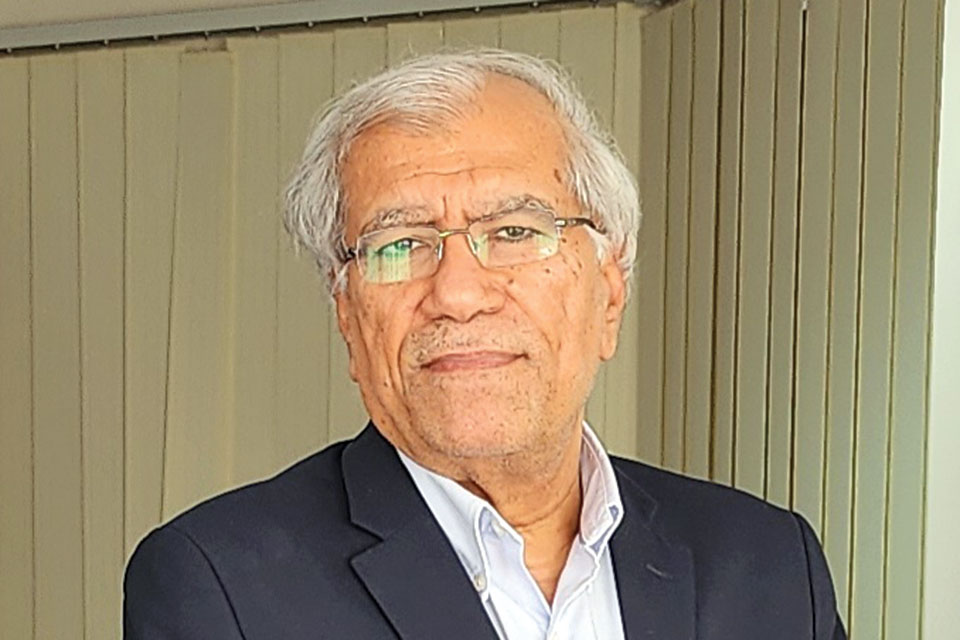
Darla Deardorff
Darla Deardorff

For more information on Prof. Deardorff, visit her profile feature with the University of North Carolina at Chapel Hill.  

Resources

Sage Handbook
To learn more about one of her most recent publications, click on the following link:  The SAGE Handbook of Intercultural Competence.


video  Video: Interview with Dr. Deardorff, March 2010


Global Brandeis Symposia

The Global: Implications for Research and the Curriculum 
April 8 & 9, 2008
Prof. Arjun Appadurai 

The Global: New Knowledge Spaces and Places 
November 2 & 3, 2009
Prof. Kris Olds  

The Global: Developing an Intercultural Mindset 
March 4 & 5, 2010
Prof. Darla Deardorff

Symposia Home


OGA

The Office of Global Affairs was created in 2007 to enhance collaboration between the Brandeis community and support international activities, programs, research and service. The OGA will build connections between the University's many ongoing activities in the international arena, strengthen the public profile of our global programs, identify new resources for international projects, and develop a strategic vision for "Global Brandeis." 


Developing an Intercultural Mindset


Darla Deardorff
Professor Darla Deardorff of Duke University leads a workshop on intercultural training

On March 4 and 5, 2010, the Office of Global Affairs hosted the second symposium of the year featuring Professor Darla Deardorff from Duke University, who collaborated with the Global Learning Committee and led an Intercultural Teaching and Learning Workshop for faculty and staff. This visit, the third overall in a series, highlighted the current emphasis on "global" or "inter-cultural" competence.

Universities, organizations, and businesses are faced with the challenge of educating and training their students and employees for a diverse environment. But what does global competence really mean? Is it simply a collection of skills to interact with people from different cultures? Or does it require a deeper shift in cognitive ability?  

This symposium drew upon the work of Prof. Deardorff of Duke University, Executive Director of the Association of International Education Administrators.  She holds a master’s and doctorate from North Carolina State University where she focused on international education. Prof. Deardorff has worked in the international education field for more than fifteen years with experience in study abroad, international student services, cultural programming, and ESL teaching/teacher training. She has served as a consultant and cross-cultural trainer for numerous schools, institutions, companies, and nonprofit organizations.

Prof. Deardorff's dissertation research has drawn national and international attention. She was recently nominated as a "Rising Star in Academia" for the Chronicle of Higher Education and is editor of The SAGE Handbook of Intercultural Competence (Sage, 2009).

Please refer to the synopses below and the sidebar for more resources on this event.


Student response dinner
Prof. Deardorff, Brandeis faculty, staff, and student leaders gather for dinner and discussion

Dinner with Brandeis student leaders
Dan Terris listening to a student's response

Alyssa Grinberg and Elaine Wong
Alyssa Grinberg and Elaine Wong compare activity notes at the Intercultural Teaching and Learning Workshop

Prof. Deardorff and colleages
Prof. Deardorff provides feedback during her Intercultural Teaching and Learning Workshop


Symposium program

THE GLOBAL: DEVELOPING AN INTERCULTURAL MINDSET

Thursday, March 4, 2010

 Global Learning Goals for Brandeis Undergraduates
     1:30 - 3:00 p.m.
     Trustees Board Room, Irving

This session matched Dr. Deardorff in conversation with the new Global Learning Committee at Brandeis, a sub-group of the large Brandeis Assessment efforts. Members of the Advisory Committee of the Office of Global Affairs also joined the discussion. The Committee is charged with thinking about "global learning goals" for all Brandeis undergraduates, in conjunction with the new Brandeis Assessment framework.  Dr. Deardorff provided an overview of similar efforts at other institutions, followed by a conversation about efforts so far at Brandeis.

Some key ideas emerging from the discussion included:

  • Intercultural Competence is a recent movement in higher education, but there have been five decades of research on the subject
  • Assessment of intercultural competence depends on what the institution wants to know, how intercultural competence is defined, and how it will be applied
  • Agreement that there is a general feeling of "intercultural" awareness (often expressed as "diversity") at Brandeis from when students first arrive at orientation, but it's not always consistently defined, especially in the curriculum
  • Cultural self-awareness is the essence of cross-cultural understanding
  • Assessment of intercultural competence is a complex and multi-dimensional process - a multi-measure approach is key
  • Learning goals need to be very specific in orde to accurately assess them
  • At Brandeis, we might begin to set the tone for this work by looking at existing evaluation and information-gathering tools like course evaluations and faculty activity reports, and coming up with language that mirrors what we want to know
  • After determining assessment frameworks, we need to craft an assessment plan


"Improvised Conversations" - MusicUnitesUS Intercultural Residency Series
     4:00 - 5:00 p.m.
     Abraham Shapiro Academic Complex Atrium


An opportunity to hear about the life and work of Azerbaijani father and daughter vocalists Fargana and Alim Qasimov.  Cosponsored by Slifka Program in Intercommunal Coexistence, Aga Khan Trust for Culture, Brandeis Council on the Arts.  Dr. Deardorff joined the participants in this open conversation.  The full residency schedule is available at: http://www.musicunitesus.info/schedule-spring2010.html

Fargana and Alim Qasimov held an informal gathering for guests.  Together, they shared stories about their lives and their experiences in Azerbaijan.  They also painted beautiful pictures about their travels around the world through their music.  Guests were also treated to a few songs by the ensemble, drawing from the repertoire of Azerbaijani ashiqs-singer-songwriters whose songs portray, often with humor and irony, the power of love and the pain of separation. 

Dinner - Brandeis student responses to global problems and disasters
     7:00 - 9:00 p.m.
     Abraham Shapiro Academic Complex Atrium


Student oriented dinner with topics of discussion primarily focusing on the collaborative efforts between student groups around major global problems, such as the Haiti Relief initiative, the Revive Mumbai efforts, relationships with Al-Quds and the Middle East, and other similar projects around the local and global community.

Student leaders from the Student Union, Al-Quds Partnership, Wein Scholars, South Asian Studies Association, Haiti Relief Effort, and STAND were just a few of the handful of representatives present at the dinner with faculty and staff members.  Students and faculty members alike reflected on the challenges student organizations face regularly on campus.  Some key points of discussion were about 'international experiences' on campus, recruitment and membership, and the relationships between organizations and their faculty advisors.

Friday, March 5, 2010

Intercultural Teaching and Learning Workshop
      10:00 a.m. - 12:00 p.m.
      Alumni Lounge, Usdan Student Center

Increasing, whether in courses, advising, or program development, our work with students involves an intercultural or global approach.  This interactive, intermediate-level workshop provided those leading and teaching student programs with an opportunity to explore ways in which intercultural competence development can be practically addressed in orientations, experiential learning and community programs, retreats, and in the classroom.

Faculty and staff members gathered together to participate in an interactive and hands-on workshop aimed at improving intercultural competencies.  Attendees also shared with each other different activities targeted at understanding cultural relativism, drawing upon their own experiences and how effective and important it is in and out of the classroom.  Prof. Deardorff provided activities and techniques for educators and leaders to implement into businesses, classrooms, and organizations.

Documents from this workshop are available for download:

Lunch - Global Brandeis and higher education
     12:30 - 1:45 p.m.
     Faculty Club Lounge

A lunch with Dr. Deardorff to talk about Brandeis' role in efforts to promote global learning and understanding in higher education.

Guests were invited to continue discussion over lunch upon completion of the Intercultural Teaching and Learning workshop.  


Please click here to download a printer-friendly version of this schedule.