Arjun Appadurai '70

Arjun Appadurai

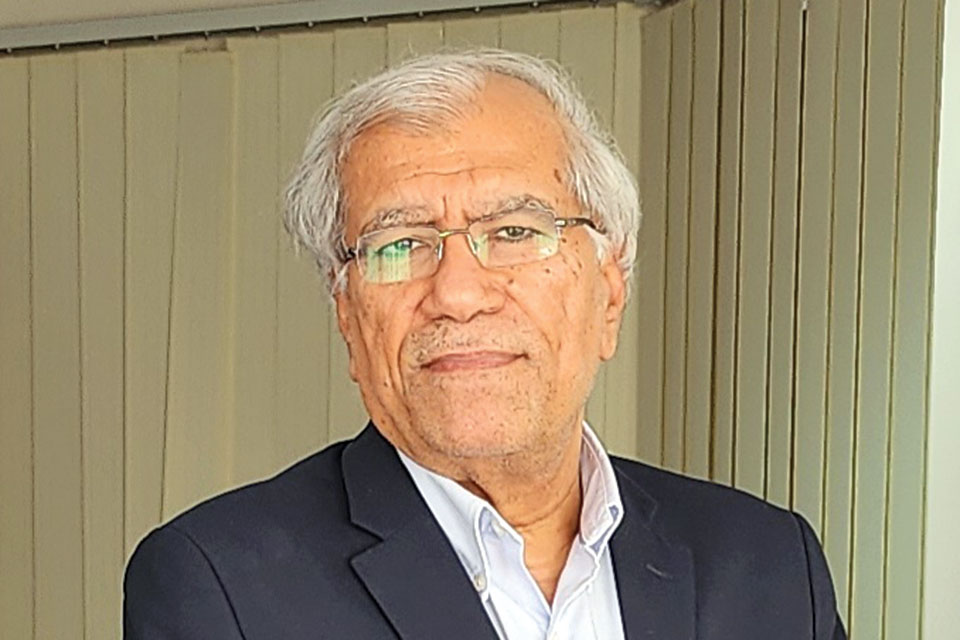
Professor Arjun Appadurai serves as Senior Advisor for Global Initiatives at the New School in New York City, where he also holds a Distinguished Professorship as the John Dewey Professor in the Social Sciences. He is the author of numerous books and scholarly articles, including Modernity at Large: Cultural Dimensions of Globalization (1996) and more recently, Fear of Small Numbers: An Essay on the Geography of Anger (2006). More information on Arjun Appadurai's work and life is available at www.appadurai.com.

Appadurai's connections with Brandeis University trace back to the late 1960s, when Appadurai was awarded a Wien International Scholarship to study at Brandeis. The Wien program celebrated its 50th anniversary a few days after the symposium.

The Global: Implications for Research and The Curriculum


University-wide symposium features Professor Arjun Appadurai '70 and Brandeis University faculty

SymposiumSymposiumSymposium


April 21, 2008
 

WALTHAM, MA - On April 8 and 9, the Office of Global Affairs hosted a symposium designed to stimulate discussion of major world issues and their implications for Brandeis - as the university seeks to fulfill its potential as a global institution.

Intended as a conversation among faculty members from across disciplines and schools, the symposium built upon the multi-dimensional work of Professor Arjun Appadurai (right), a renowned anthropologist and Brandeis alumnus currently teaching at the New School for Social Research. Prof. Appadurai delivered a keynote talk on April 8, followed by smaller faculty sessions on April 9. The symposium also featured a lunch discussion on global community engagement involving undergraduates, graduate students, and faculty members of the community-engaged learning program at Brandeis.

"The Global: Implications for Research and the Curriculum" raised a number of important topics for scholarship, teaching, and informed activism at Brandeis. Among them are the challenges of conducting large collaborative research projects across borders, the rise of competing channels of knowledge and research in a digital world, the role of the professional schools in a "liberal arts" education, and the required and non-required core skills, knowledge areas, and civic values needed for the 21st century. The centerpiece of all this discussion was Brandeis' unique mission as a young, dynamic institution committed to social justice.

More information and follow-up to these events will be posted here soon. Video and some resources from the symposium are listed below.

Learn More:


symposium

Schedule of Events

Arjun AppaduraiKeynote Address: "The Globalization of the American University"
Video archive (Quicktime Required)

Arjun Appadurai launched our symposium with a plenary talk intended for the broader Brandeis community to think about education, knowledge, and social action in an international context. Introduction: Daniel Terris, Associate Vice President for Global Affairs.

The Global: Implications for Research

Faculty discussants:

Arjun Appadurai, The New School
Jim Bensinger, Physics (presentation copy available)
Angela Gutchess, Psychology (presentation copy available)
Caren Irr, English & American Lit.
Catherine Mann, IBS/Economics
Rick Parmentier, Anthropology/IGS

Scholarly research from a variety of disciplines has deepened our understanding of institutions, ideas, and forces that cross national boundaries. In turn, new facets of “the global” (and related concepts of the international, the transnational, and the intercultural) have forced scholars to rethink fundamental assumptions, and to chart new lines of theory and inquiry. This session featured brief accounts of current research undertaken by Professor Appadurai and selected Brandeis faculty members. 

Lunch Discussion on Community-Based Engagement

Discussants:
Arjun Appadurai, The New School
Panther Alier, MA candidate, SID program, Heller
Mark Auslander, Cultural Production/Anthropology
Jane Hale, Romance Studies

During an informal lunch, Professor Appadurai and faculty, students and staff at Brandeis talked about their work in community-based research and learning, including projects from Africa to India to Waltham. As an extension of his work as a scholar, Professor Appadurai has been a principal in founding a non-governmental organization called PUKAR [Partners for Urban Knowledge, Action and Research] in Mumbai, India. He argues for a fresh approach that he calls “documentation as intervention” - developing mutual links between community, research, and activism. The discussion centered on similar projects at Brandeis and future possibilities for faculty, student, and community interaction. 

The Global: Implications for The Curriculum

Faculty discussants:
Arjun Appadurai, The New School
David Gil, Heller (paper available)
Judith Herzfield, Chemistry (abstract available)
Bob Lange, Physics/Education/Coex
Andrew Molinsky, IBS/Psychology (presentation available)

What do students need to know, and what skills do they need, to lead productive, fulfilling lives in the era of globalization? Does the current Brandeis undergraduate curriculum meet those needs? Is there an inherent conflict between knowledge, values, and skills, given the time constraints of an undergraduate career? Do we wish to ensure that all students acquire greater global knowledge and skills, or is it sufficient that we provide opportunities for those students who want broader and deeper study in relevant fields? Finally, are there other vehicles (for instance, in the co-curriculum through structured experiences) for students to gain an enduring international/intercultural perspective in all disciplines and professions? Professor Appadurai offered some initial thoughts, drawing on his experience at several institutions of higher education; selected Brandeis faculty also presented brief remarks about what we currently offer, and where we might go. 

symposium 
Goals and Outcomes

1. Providing a forum for faculty and select administrators and students to consider these questions from an intellectual, scholarly perspective. 
2. Linking these discussions and thinking to on-going efforts to shape Brandeis as a global institution at its core – the faculty’s research and teaching broadly defined. This will help to produce an intellectual framework for Global Brandeis.
3. Creating excitement for the possibility of a team-based approach across disciplines, cultures and physical spaces through symposium discussions and sessions.
4. Examining questions that cater to Brandeis’s strengths in innovative thinking, a commitment to truth and social justice, and research. At the same time, these questions should challenge the Brandeis community to think in new ways about their work outside of boundaries already present.
5. Producing a document that synthesizes the thinking from the symposium, and which also celebrates and highlights work already being done on the Brandeis campus.