ENACT Your Vote: Voting and Representation in the States
January 27, 2026
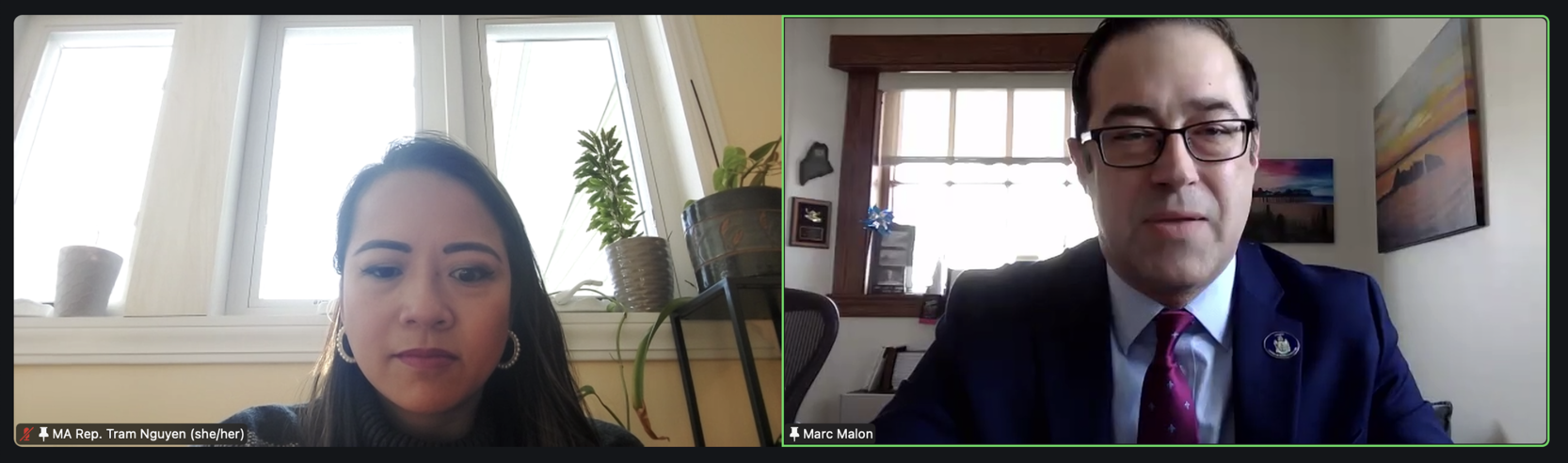 On January 27th, ENACT held a network-wide virtual panel conversation on voting and representation in the states. The virtual event was hosted by ENACT Director Melissa Stimell’s Brandeis ENACT course “Advocacy for Policy Change”, and was cosponsored by Brandeis University’s non-partisan VoteDeis Campus Coalition, which is dedicated to supporting voter registration, voting, and civic engagement.
The event, moderated by ENACT Assistant Director David Weinstein, featured Massachusetts State Representative and candidate for the United States House of Representatives Tram Nguyen (D), (pictured above, at left) who represents the 18th Essex District, which includes parts of Andover, Boxford, North Andover, and Tewksbury; and Voting access advocate and Maine State Representative Marc Malon II (D), (pictured above, at right) who represents Maine's 133rd House District, in Biddeford, and is in his 2nd term in the state legislature.
(A third scheduled panelist, Oklahoma State Representative and Minority Whip Mickey Dollens (D), who represents Oklahoma's 93rd district, in Oklahoma City, was unable to participate.)
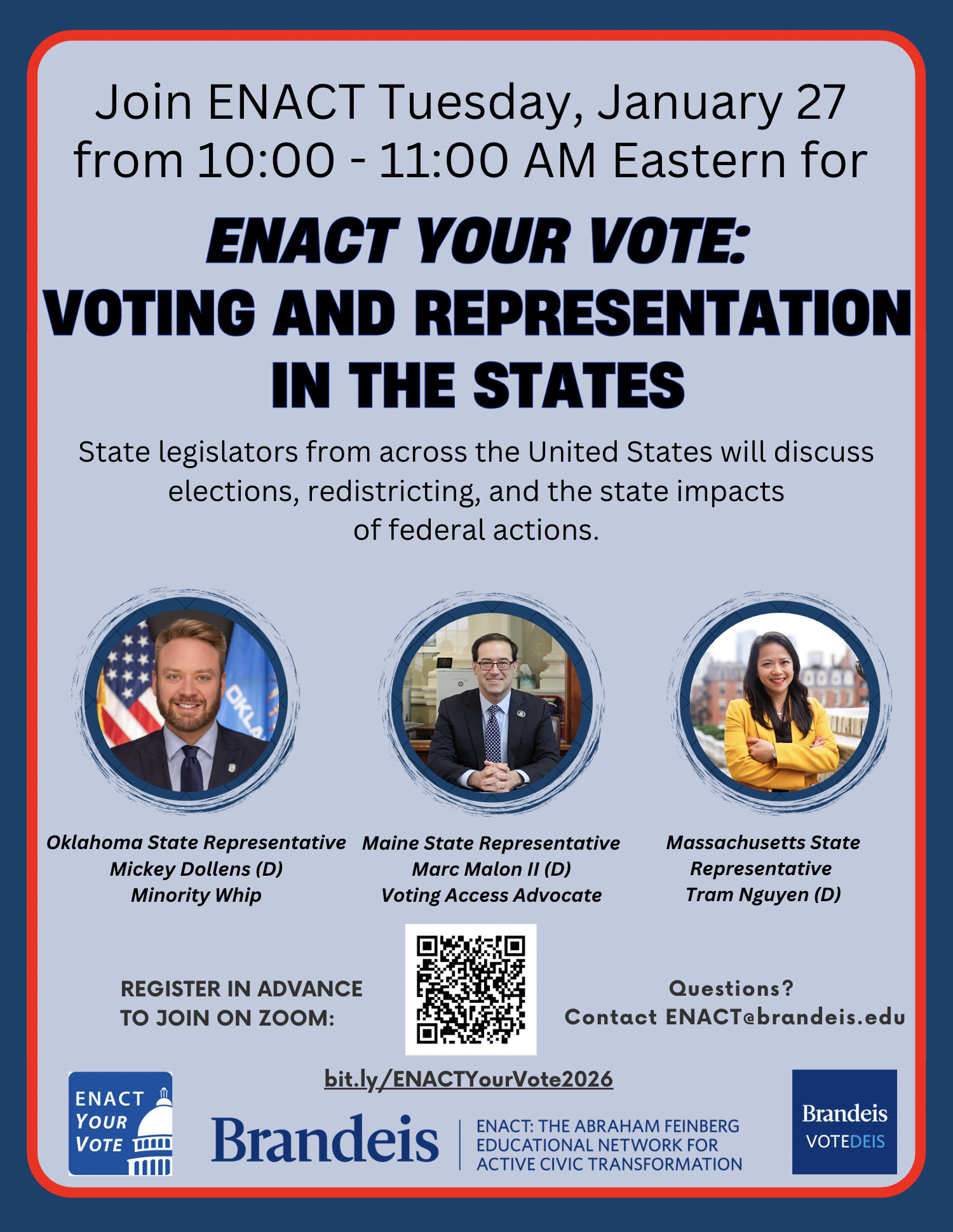 The discussion focused on elections, redistricting, and the state impacts of recent federal actions. Students asked what college students can do to advocate for voting access, and how voting access differs for various demographics and how that might be addressed, among other questions.
There are ENACT courses in all 50 states, and students and ENACT faculty fellows from several states joined the conversation, including all of the students in Prof. Stimell’s ENACT course at Brandeis and Prof. Rich Meagher’s ENACT course at Randolph-Macon College in Virginia, as well as ENACT students from the United States Air Force Academy in Colorado and Oklahoma City Community College.
Alumni of Brandeis and of ENACT courses around the country also participated.
ENACT: The Abraham Feinberg Educational Network for Active Civic Transformation, a national, inter-collegiate non-partisan program that empowers students to be active participants in democratic processes through connecting with policymakers and community organizations; conducting research and analysis; and informing public policy with evidence and expertise.