ENACT at Seattle University: Developing Complex Perspectives Towards Change
Prof. Zachary D. Wood, ENACT Faculty Fellow
December 2023
I strongly believe that this ENACT course is one of the most dynamic and culminating experiences for my students at Seattle University.
Most of my students come to the university with deep passions, idealism, creativity, and brilliance. Yet they are overwhelmed by the immensity of the societal challenges we face. This can easily lead to stagnation and cynicism at this crucial juncture in their education. What they often need – and this course facilitates – is process-based knowledge and a safe place to develop complex perspectives towards change.
“Urban Public Policy,” adapting the ENACT model, was built around the idea that we can intervene at this beautiful moment to support students to build skills, reflective processes, and a sense of solidarity to both imagine and design what change can look like; and that we can hold both idealism and realism in that crucial work.
In short, to harness and develop these points of passion for real issues, the work students engage in needs to be consequential, not just performative. They are tasked with accomplishing something that is both very real, and nearly impossible in the available timeframe of a single semester.
Given this dynamic, students are stretched in ways they haven’t before. To accomplish their work, they are forced to make difficult decisions, while reflecting on what those decisions mean for actual policies.
The core purpose of this course is to examine real issues, but not in the static, problem-definition way that traditional courses are often structured. The idea is to help students enter a scenario of action, using dynamic, hands-on, project-based structures, with an eye toward meaningful change.
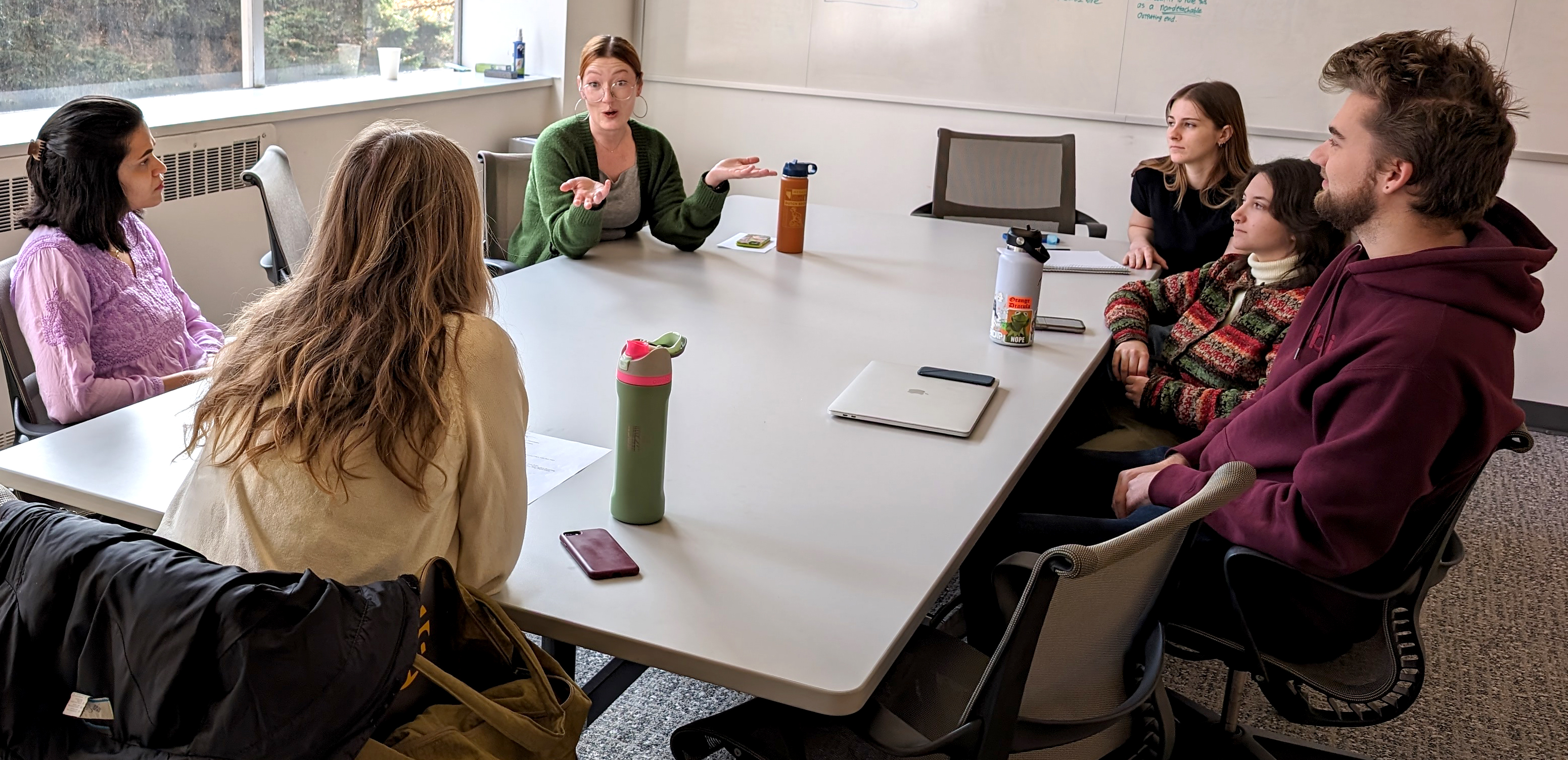 PHOTO: Team Modern Recycling focused on Senate Bill 5154 - This bill focuses on the modernization of Washington State’s recycling program that was once a beacon for other states and has been lagging in recent years. Nicknamed the “bottle bill," this bill does much more than establishing the bottle return program that gives it that moniker. It also sets strong new standards for the production and distribution of recyclable and compostable products across the state.
Practically, early in the semester students must quickly form small groups of three to five peers around self-selected policy issues and dive immediately into the work. In this class, they are taught the style and structures of the policy and advocacy processes; but their creativity, their voice, and the distribution of workloads are largely in their hands.
Every assignment builds toward the larger effort of informed and interactive policy advocacy. Each group studies background information, thoughtfully examines various positions on the issue, meets with community organizations and legislators, develops advocacy materials.
At the end of the course each group presents their work in a dynamic event called “Present and Defend.” (See photos.) They present their work in three scenarios specific to the legislative process: a formal presentation, a roundtable dinner, and an impromptu meeting with a legislator in the hallway.
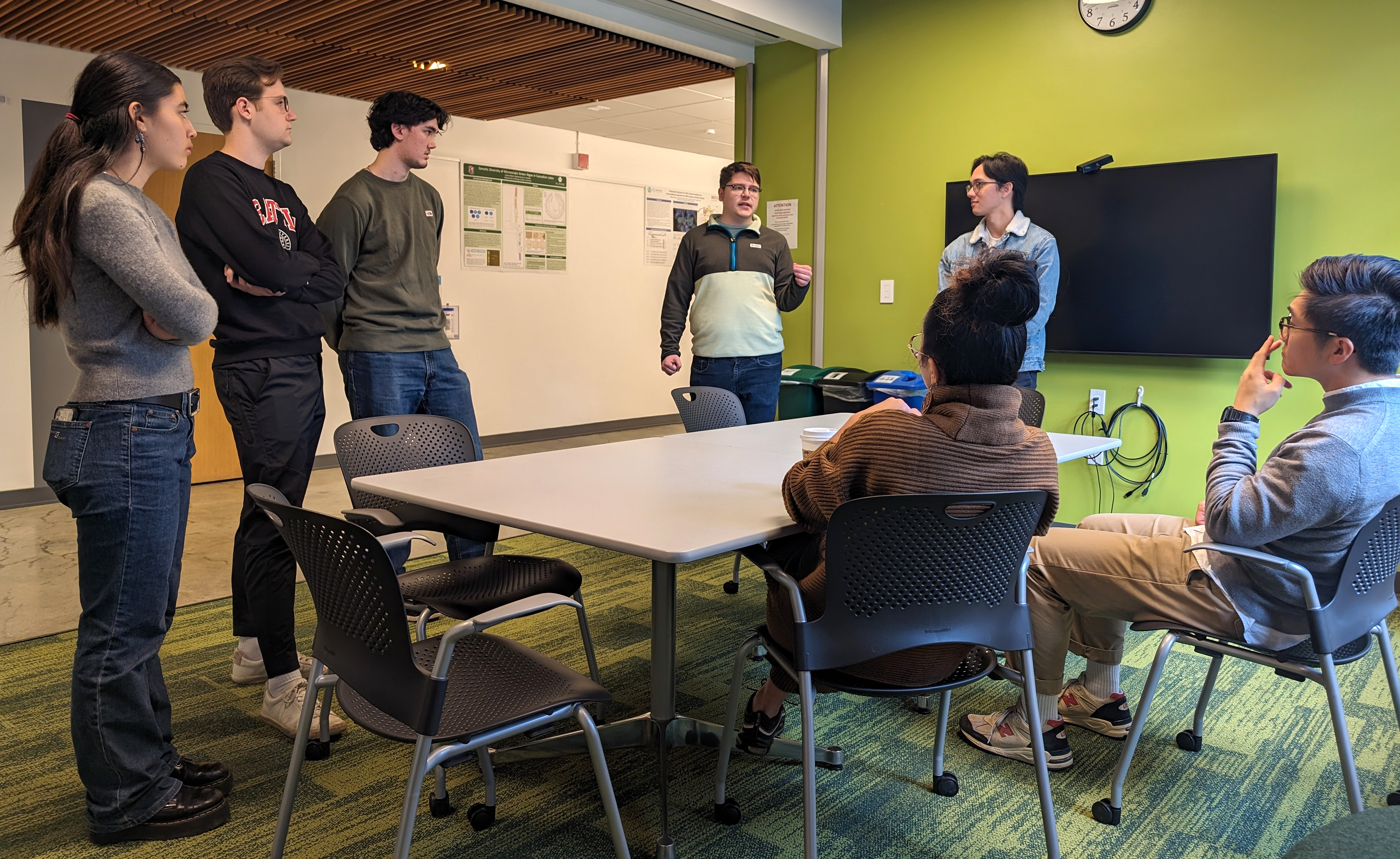 PHOTO: Team Transit-Oriented Development focused on Bill ESSB 5466 (Engrossed Substitute Bill). This bill is initiated to the promotion and development of transit-oriented development in all growth management plans for the Washington State. Among other things, it initiates density-based development within defined transit station areas through eliminating maximum floor area ratios and multi-family restrictions. It would also reduce or eliminate off-street parking minimums for developments.
Introspectively, students wrestle with several key concepts in this course.
First, they examine their own positionality, and how they enter the issue at hand. In this way, they recognize that they are neither the initiator of this issue, nor are they the expert. In this way, I encourage students to acknowledge that they are entering into a conversation “already in progress.” This perspective enables students to situate themselves more appropriately as they engage with community organizations, dissenters, and legislators in their work; as partners, with voice and value, but also with only partial knowledge… and complicated senses of power and powerlessness that we must be attentive to.
Additionally, students must learn to situate themselves into a “trajectory of the movement” where they are challenged to make sense of the pace of progress, how to wrestle with compromises, and to develop a sense of how and where their work fits into the larger fights for change that they ultimately want to see. This is especially difficult, and a crucial point of development for policy work.
Each policy we encounter is just a small part of a wider issue. The challenge for the students is to examine and hold that deeper complexity, while working on piece that can drive the larger change we want to see. Often, they are striving to reconcile that their bigger aims will continue to be a work in progress – likely forever.
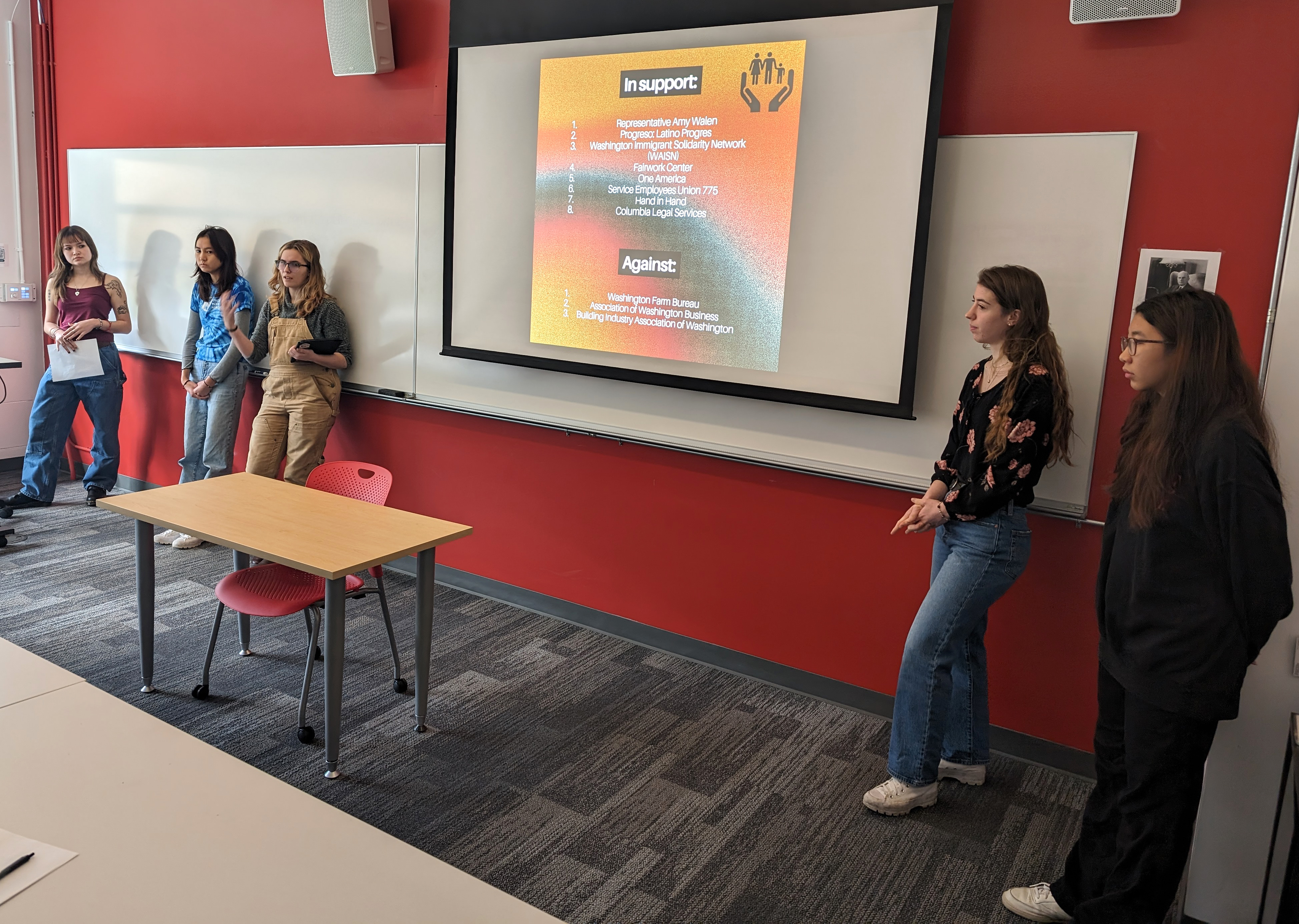 PHOTO: Team Wage Replacement focused on House Bill 1095. This bill seeks to establish a wage replacement program specifically for specific qualified unemployed workers who otherwise are not eligible for unemployment benefits due to their worker status in the United States. In particular, this seeks to support a population of undocumented agriculture workers who have no financial protections, despite their necessity and reliance in several key industries.
Students entering this class are quite typically scared and skeptical of the design. They shun group work in general, believe they have a strong grasp on the policy process, and typically are quite cynical of the prospects of policy toward social change. They typically express a deep sense of transformation at the end of the term.
Prof. Zachary D. Wood, ENACT Faculty FellowAs part of their final portfolio, students are asked to reflect on the entire experience, and what surprised and challenged them the most. Their comments, excerpted below, show the impact of the ENACT experience, even over just one semester. They are empowered, humbled and more confident, more informed and ready to take the next steps of civic engagement:
- Engaging in this project has demystified the legislative process. The legislative process is more accessible and comprehensible to me than ever before.
- We discovered that opportunities can be found in unexpected places or situations.
- The highlight of the quarter was the “Present and Defend” assignment, where we saw the fruition of our collective efforts for this project. This aspect allowed each team member to showcase their individual contributions, and our deep understanding of different facets of the bill complemented one another.
- I was surprised by how much harder it was to research the bill than I expected. Simply finding accurate, in-depth information proved challenging. The text of the bill is very complicated, and in media reports and outside analysis, it was too simplified for the purposes of this course. Working with a group undoubtedly helped this process.
- I originally had hesitations about doing so much group work, but my group worked together very effectively. No one became territorial or defensive, which helped a lot.
- I really liked that this project forced us to apply lectures and readings to how to advocate for and engage in conversations about our bill.
ENACT Faculty Fellow Zachary D. Wood is an Assistant Professor in the Institute of Public Service at Seattle University, primarily assigned to the undergraduate Public Affairs program. He holds a PhD in Public Affairs from Rutgers University, with a specialization in Community Development.
More about ENACT: The Educational Network for Active Civic Transformation