What We Hear from Parents and Camp Leadership
“For us as a family, in today’s daily reality, the program truly provided a sense of home and belonging.”
“Even families whose campers weren’t fluent expressed surprise at how much Hebrew their kids picked up naturally through play.”
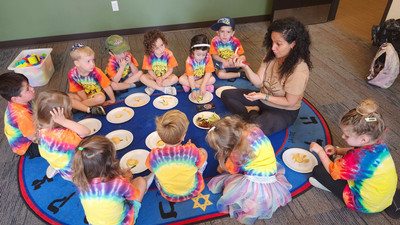 Again and again, camps and families told us the same thing: Hebrew did not stay at camp. It came home with the campers.
One camper said camp was “the best thing” because she could learn “a language that none of her family knew at home” and then “play school at home and teach them how to speak Hebrew.” A parent shared that hearing her son come home “singing Mashina is nothing short of spectacular,” adding that camp was “probably the most immersion he can have to Israeli culture outside of Israel.” Another camp put it simply: “Children definitely came home and spoke Hebrew at home.”
At camp itself, Hebrew became part of everyday life and camp culture. One camp described how Milat Hayom “has become a moment that is fun, the presenters are respected, and engagement is up,” and added that “you do hear kids using those words and phrases around camp, sometimes at random moments.” What started as a routine began to spread more naturally across camp. As they put it, “The Hebrew is starting to embed its way into the fabric of ‘just what we do here.’”
Families also spoke about the emotional side of the experience. One parent wrote, “He felt loved, cared for, and excited each day.” Another said, “What an incredible opportunity we get through this camp to bring them closer to Judaism and teach them a little about our Israeli culture which they fell in love with.” For some children, camp was also the first place where Hebrew felt comfortable and safe. One parent shared that their child “felt comfortable at camp because it felt like a place he could make mistakes.”
Taken together, these voices point to something bigger than vocabulary alone. Hebrew is not only being taught. It is being used, enjoyed, carried home, and woven into the life of the camp community.
“They returned home full of stories and new experiences... they came back with big smiles, curiosity, and you could have noticed the change in their connection to their Jewish and Israeli identity.”
“If I had one piece of feedback, it would be to extend the Hebrew-speaking group through the full summer. We would’ve loved to stay longer!”
“Many Israeli kids right off the plane from Israel felt more connected and at home because of the focus on Hebrew.”
“Every single parent, without exception, praised the program.”
“I met several parents on Shabbat afternoon who told me how excited they were to hear new words and cute slang that their child had learned from their Israeli counselor.”
“It’s amazing how comfortable her child can feel using Hebrew after only 3.5 weeks.”