Seals or Buttons? Experimental Archaeology using 3D Printing
Dagny Michaels (Graduate student in Anthropology) describes her project:
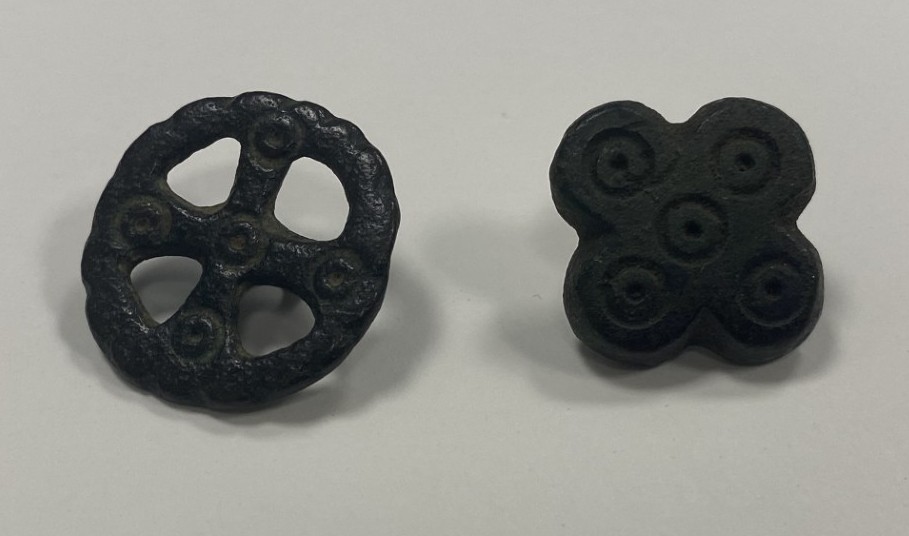 The so-called "seals" stored in the CLARC collection.
Brandeis is home to several hundred archaeological artifacts located in the Classical Studies Artifact Research Collection (CLARC). While filtering through CLARC for another project, I came across two small bronze objects labeled as seals. The shanks located on the posterior surfaces of each object, combined with the relatively shallow adornments on the anterior surfaces, seem to suggest another use. Through some additional research, I became curious as to whether these objects were misidentified, and instead are pectoral crosses meant to be worn on the chest of an individual.
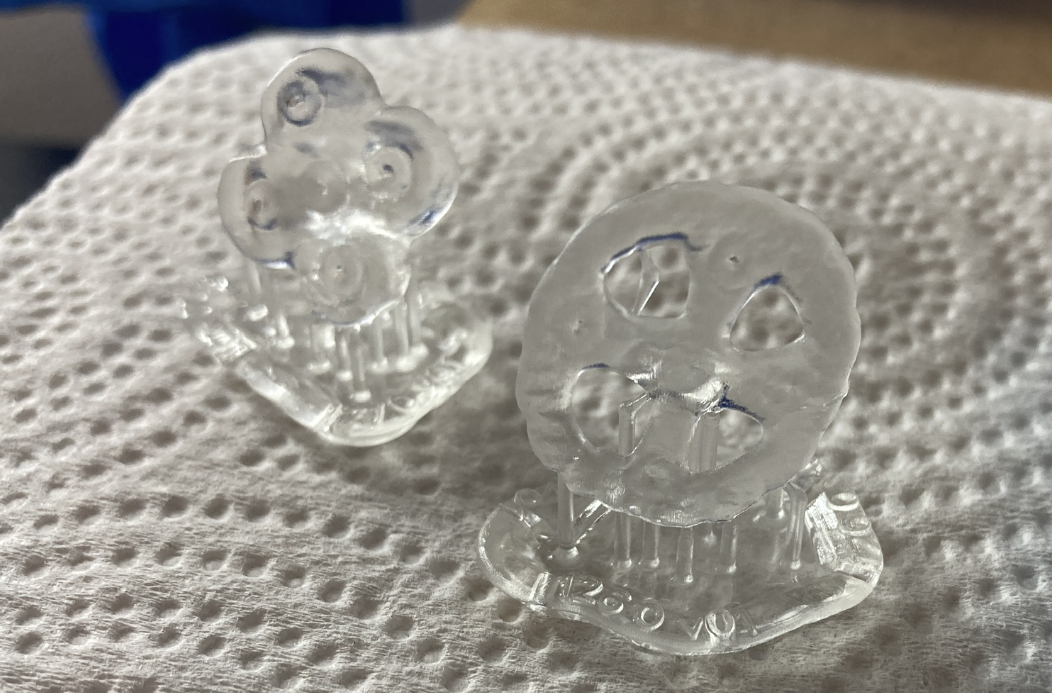 The suspected buttons were 3D printed in clear resin.
With the help of BDI, I was able to test my hypothesis via experimental archaeology. Using the Artec Spider scanner, we were able to produce detailed 3D models of the artifacts. We then made those scans material via resin printing (resin, of course, allowing for the reproduction of finer details versus PLA). After many burnt fingertips, the resin replicas of the artifacts were pressed into hot wax, as a seal would have been. The shallow indentations in the wax and the impracticality of using the shanks as handles might support the hypothesis that these objects are not, in fact, seals.
Experimental archaeology projects like this are made possible through the open access to BDI’s plethora of digital and maker resources and the support of its amazing faculty. Access to these resources offer many opportunities for experimental research in archaeology and museum collections within the greater Brandeis community.
Full article to come!