Organizing a GLOBAL WOMEN’S STRIKE as an Artistic Intervention (in GERMAN with English translation!)

Co-sponsored by the Department of Women's, Gender, and Sexuality Studies (WGS) at Brandeis University.
About the Event
CGES hosted a conversation with two of the German organizers of the planned “Global Women’s Strike: “ENOUGH! GENUG! BASTA!" on Monday, March 9, 2026.
Listeners learned more about what inspired this multifaceted initiative, how it is being organized, and what the “artistic intervention” hopes to achieve.
About the Speakers
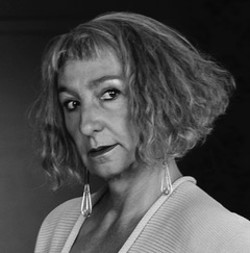 Adrienne Goehler: Certified psychologist | President of the University of Fine Arts in Hamburg | Senator for Science, Research and Culture, Berlin | Curator of the Capital Cultural Fund | Fellow and Affiliate Scholar at RIFS Potsdam Today: freelance publicist and curator | Initiator and artistic director of the travelling exhibition ZUR NACHAHMUNG EMPFOHLEN! explorations in aesthetics and sustainability | Driver of the idea of a fund for aesthetics and sustainability |FÄN | Initiator and curator of HOPE HOME • НАДІЯ, a pilot project for a radically different approach to reconstruction in Ukraine; linked to a broad network spanning various fields of knowledge, disciplines and geographies for the use of renewable building materials. Initiation of GLOBAL WOMEN'S GENERAL STRIKE 9.3.26, at least as a dress rehearsal
 Rita Schuhmacher's work is rooted by her background in cultural studies, journalism, and union work. Growing up between Germany and Portugal, she learned early on that belonging isn’t bound to one place, but shaped by people, language, and shared experiences. Living between cultures made her attuned to the social dynamics of inclusion and exclusion — and sparked her curiosity for the political dimension of everyday life. It’s this awareness that continues to shape her work today: understanding structures, exposing inequalities, and amplifying voices that are often unheard.
She holds a degree in Cultural Studies, Media Communication and Gender Studies and approaches her work from a feminist and intersectional perspective. For the past years, she has worked as an editor at ver.di, one of Germany’s largest trade unions, where she covers issues at the intersection of labor, democracy, and social justice – from political education and anti-fascist resistance to digital surveillance and feminist health.
Previously, she worked in various roles across NGOs and agencies – always navigating the space where communication meets activism. Whether in campaign development, content strategy or journalistic writing, she has been driven by the desire to make complex realities accessible and to challenge the systems that produce inequality.