Graduate Students Across Fields Receive Prestigious External Fellowships
May 7, 2026
Abigail Arnold | Office of Graduate Affairs
Over the course of the academic year, the accomplished Brandeis graduate students have been applying for fellowships and grants – and getting them! Students across fields have received fellowships from a variety of prestigious organizations. We talked to four of them about the process.
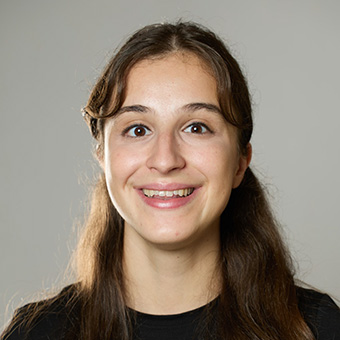
What fellowship did you receive?
I received an F31 grant. It will support me in my research and training and will specifically support my dissertation project. It will fund the work as well as trips to conferences to present about it, opportunities to work with other collaborators and consultants, and trips to workshops to learn more about neuroimaging.
What does your research focus on?
I work in a human neuroimaging lab – we look at healthy older adults and how individual differences in their brains and behavior might influence their aging trajectories. My research looks at Alzheimer’s-related pathology that can develop relatively early and is present even in healthy older adults. Typically, the emergence of this pathology coincides with worsening depressive symptoms, so my work focuses on better understanding these relationships. I also try to understand how differences in the serotonin and norepinephrine systems, which we measure with PET imaging, could influence the relationships between pathology and mood.
How did you go about applying for this fellowship? Were there any resources on campus that helped you in the process?
I started about a year before I submitted. In Neuroscience, we have a proseminar where we work on drafting and writing the research section of a grant proposal: that was very helpful because it forced me to sit down, think out my project, and write the draft. I talked with my advisor, Anne Berry, and we decided to formally submit the grant proposal. From there, I rewrote and reworked the research section, so starting early was very helpful. I also got feedback from post-docs and other PhDs in my lab, as well as my PI. I got a lot of help from people in the lab who had previously applied for the F31. The grants office was the most incredible resource – I was assigned a grants liaison a couple months before the submission deadline, and they reviewed my documents and helped keep track of deadlines. Christine DiBlasi also hosted a workshop and information session specifically for the F31 a couple months before the due date, which was very helpful, especially with the non-research documents. And the office was always very helpful when I reached out with questions!
What are you most excited about in the upcoming research process?
The most exciting thing is to know that I have this support and can be more vocal about workshops and conferences I want to go to and learn from. I can have more resources to support me as I do my project and am really excited about the opportunities. It’s also exciting to know that I am able to do the project and don’t have to worry about financial support.
What advice would you give to other students applying for fellowships?
Start as early as possible. Probably everyone who’s written a grant knows this, but it really takes so much longer than you anticipate. Once I had drafted my six-page research strategy, I had to go through the process of sending it to my PI, having her review it and send it back, and making rewrites. You should also rely on others in your field who have submitted a proposal before as resources, examples, and sources of feedback. Others in my lab have gotten F31s before, and some of the postdocs got F32s – they obviously have a lot of experience writing them and were very helpful. Reach out to the grants office sooner rather than later so that they can help, and attend their workshops and information sessions. I would never have been able to do it without support.
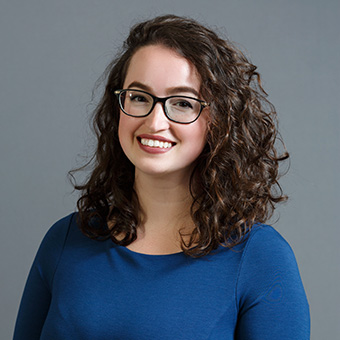
What fellowships did you receive?
I received a dissertation fellowship from the American Association of University Women and a PEO Scholar Award.
What does your research focus on?
I focus on early-career singers within the American opera industry – specifically, Young Artist Programs. These are akin to postdocs/internships and are aimed at helping singers bridge academia to a professional career. I look at how these programs became institutionalized in the US and how they shape singers’ lived experiences, often reinforcing harmful systemic oppressions like fatphobia, sexual misconduct, and precarity. I have conducted interviews and surveys as well as archival work and have drawn on my past experiences in such programs. The purpose of my research is to help bridge the divide between musicology and industry practice and hopefully to inspire change by highlighting some of these harms.
How did you go about applying for these fellowships? Were there any resources on campus that helped you in the process?
Finding the right grants to apply for was the hardest part. I learned about some through word of mouth and also used the Pivot, the dissertation fellowships wiki page, and a variety of other websites. I usually have a long chart of upcoming opportunities, which I call my “Tracking the Academe” Excel document. I put everything in – calls for papers, job opportunities, funding opportunities – going out as far as five years, including what application materials I need and how I will get there. I was fortunate to have my adviser, Emily Frey, send me the proposal she won a fellowship with during her doctorate; it was great to have someone’s writing sample, because I often found the questions were so open-ended that it was hard to know how to structure my answers. I also reached out and asked for people to read my materials in advance; Emily and my DGS, Brad Garvey, gave me useful feedback. That did mean working to have the materials ready far enough in advance! John Pippen, a professor at Colorado State University whom I’ve worked with for a while, also read through the chapter I submitted as a writing sample and was really wonderful in helping to restructure it, which is also great for the dissertation itself!
What are you most excited about in the upcoming research process?
I’m excited for the amount of care and time I’ll be able to give the dissertation. Without funding and time, I wouldn’t have been able to do exactly what I wanted to do with it. Now I’m redoing the appendices because I have the space to do them the way I really wanted. There are pockets of my research I wanted to gain more knowledge of and delve into further, and now I’ll be able to add them into the dissertation and provide more crucial lenses. I’m also planning to continue doing more interviews. The funding allows me the space to write at the pace I want to be writing at and not be rushed. I love taking my time and mapping structure and phrasing. I can sit and ponder a sentence! I plan to write on this topic pretty much forever, since there are way too many things to talk about, and to date there have been only two peer-reviewed articles, period! So I have possibilities from this research for future projects as well.
What advice would you give to other students applying for fellowships?
Tracking your applications in advance is a good plan – map out what you need. Get things drafted early and write down exactly what each requires. Often, there are components you need external help for (e.g., recommendation letters or verification of your student status), and you should get them requested early so that you don’t have to worry. Drafting early also allows you to let a week go by and look back at your materials, as well as have others review them. In addition, it’s important to take care of your mental health. For me, this was a trying year, knowing that my Brandeis funding was ending; I was applying for jobs and fellowships and making different contingency plans. Allow as much time as you can to do things that spark joy and relaxation too.
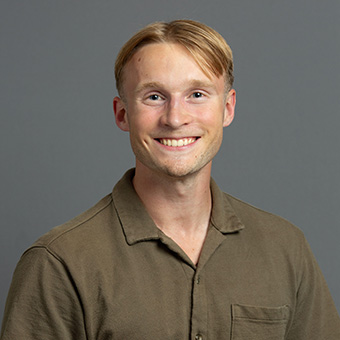
What fellowship did you receive?
I received an NDSEG fellowship through the Department of Defense. This is a graduate fellowship awarded through a specific DoD branch, in my case the Army Research Office. I will be funded for the next three years of my PhD to conduct research that is in line with the office’s interests.
What does your research focus on?
My research focuses on developing a novel pipeline for antibiotic discovery. Antibiotic-resistant bacteria are a huge public health burden, and the army is especially interested in this area because they are a risk on battlefields. Most current known antibiotics come from microorganisms; the producing species also encode resistance to their own toxins. These genes can be picked up by pathogenic organisms in nature, so naturally-derived antibiotics essentially have a shelf life. My advisor Hyunjun Yang and I came up with the idea of mimicking the most effective natural antibiotics with a synthetic structure, thus avoiding the resistance.
How did you go about applying for this fellowship? Were there any resources on campus that helped you in the process?
The first thing I did was look through the broad agency announcements from the Department of Defense that list areas of research they are interested in funding. I wanted to find one that aligned very closely with my proposed project. I did this with Yang and wrote a proposal trying to directly answer their problem. Yang was my main resource, and I also discussed experimental methods with other faculty.
What are you most excited about in the upcoming research process?
I’m really excited about being able to present at the Department of Defense fellows conference with the other fellows. They will also assign me a mentor from one of their agencies, and I’ll be able to meet other great scientists and get my work out there.
What advice would you give to other students applying for fellowships?
In the end, each grant program is looking for something particular. The most important thing is to research the one you are applying to and what they are looking for and make sure that your proposal meets their criteria. You can have a really cool proposal, but if it doesn’t meet the fellowship's criteria, you probably won’t be selected. You should also make sure that your proposal is accessible to scientists regardless of their background. The person reading the proposal may not be in your field, and you want to make sure they can still understand it. A good way to do this is through making attractive and illustrative scientific figures.
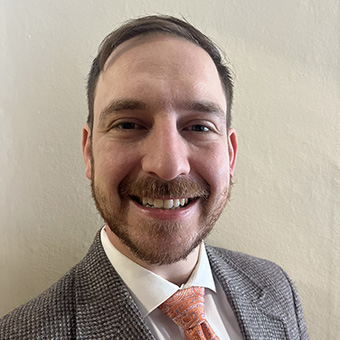
What fellowship did you receive?
I received the Sid and Ruth Lapidus Graduate Student Research Fellowship from the Center for Jewish History in New York. The CJH provides a collaborative home for five partner organizations and includes an Institute for Advanced Research that welcomes an annual cohort of fellows who conduct research in the collections of the Center’s member partners. In addition to funding, the fellowship gives me access to a collection of archival materials I haven’t been able to use yet.
What does your research focus on?
I’m broadly interested in the nexus of slavery, commerce, and Judaism in early America. I am interested in moments when early American Jews could not or did not act as undifferentiated members of the white enslaving class. For instance, I focus on how they met the demands of Jewish life: kosher meat, candles, and building synagogues. I am specifically looking through the papers of Aaron Lopez, the most famous member of a Jewish merchant family. My research also breaks new ground in the history of slavery by revealing details and aspects of enslaved life that were previously poorly documented. I am mostly focused on Newport, Rhode Island, with some focus on New York and Charleston, South Carolina.
How did you go about applying for this fellowship? Were there any resources on campus that helped you in the process?
I’ve been aware of this fellowship for a long time and thought I wasn’t a good candidate for logistical reasons. Then, this winter, I was at a conference and was chatting with people from the Center who encouraged me to apply. The deadline was pretty close (the same month), so it was a pretty quick turnaround. I got great feedback from my colleague, now Dr. Alex Szabo, who helped me hone my proposal. I ended up sending the proposal in from my vacation because of the compressed timeline!
What are you most excited about in the upcoming research process?
I’m excited about the access to the archives. There are three big collections of Aaron Lopez papers; the biggest is at the Newport Historical Society, where I’ve spent intensive time, but the second is at the American Jewish Historical Society (which is one of the five partner institutions of the CJH), and I am excited to work with them. I’ve been able to use their finding aid to request some materials for specific questions, but I haven’t worked much with them. This will be a chance for me to collect research, fill out my dissertation, and have access to a community of Jewish Studies scholars in the next year.
What advice would you give to other students applying for fellowships?
Apply! This is the “biggest” fellowship I’ve gotten. I benefited from having gotten smaller fellowships, which let me do enough research to make myself a competitive candidate for a year-long nationally competitive award. Each time you apply for a fellowship, you get better at defining your own project. You don’t want to apply for something in a make-or-break situation with no practice explaining your project! It’s also important to ask people for help and circulate your materials – Alex helped my application be much better. Most applications are fairly short, so it is a nice thing to ask people to help with; it’s especially good to get help from people in adjacent fields.