2025 Graduate Research Grants
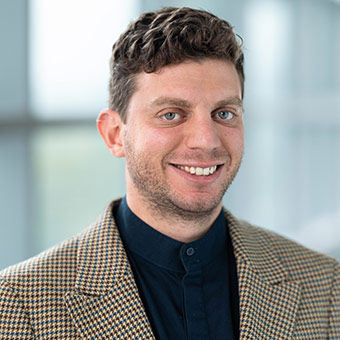
“Why Not Return to Him the Whole United States?”: Native American Land Claims and the Cultural Contexts of Aboriginal Title, 1918-1939.
My dissertation investigates Native American land claims in the 1920s and 1930s United States. After serving in the U.S. military in record numbers during the Great War, different groups of Native Americans petitioned the federal government to recognize their legal title to ancestral lands, and they achieved different results. My two primary case studies are the 1923 Black Hills Claim in South Dakota and the 1924 Pueblo Lands Act in New Mexico. I argue that Pueblo Natives were more successful than Lakota in having their land claims recognized by the U.S. federal government because the white settler community in New Mexico valued and exploited Pueblo art and architecture, whereas the white settler community in South Dakota relied on the dispossession of Lakota from the Black Hills in order to mine gold. While the 1924 Pueblo Lands Act settled title disputes and protected Pueblo land holdings from diminishment and alienation, the 1923 Black Hills Claim was ignored for decades and ultimately dismissed by the United States Claims Court in 1942. I argue that Native petitions for aboriginal title were more likely to be accepted by legal authorities in contexts where Native presence reinforced the supremacy of white settler society.
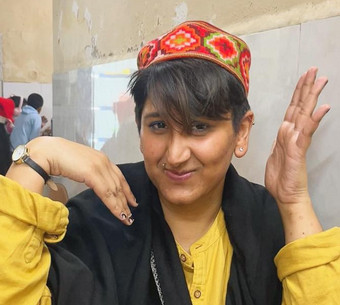
Unmarried Daughters, Caretaking Sons: Queer Transmasculinities and Natal Kinship in North India
My research explores how unmarried North Indian butch, non-binary, and transmasculine individuals assigned female at birth negotiate kinship relations with their natal kin. In a country where over 80% of adults live with their parents and other close kin for most of their lives, the role of the family and domestic space as constitutive of queer life in India cannot be understated, especially for those socialized as daughters, who are traditionally thought to only temporarily belong to their natal homes until marriage. In contrast to narratives about queer people needing to escape the natal home due to violence or seeking economic mobility and/or queer community in more metropolitan cities, my work shows how masculine daughters are enmeshed in emotional and material interdependence with their families. My research illuminates how individuals take on a form of culturally inflected North Indian masculinity characterized by a figure who can be a rowdy gunda (goon, gangster) engaging in hadkana (stirring up trouble) in public society while simultaneously being generous, heroic, and sacrificial to one’s natal kin. These butch, non-binary, and transmasculine individuals’ material, financial, and emotional caretaking of their natal kin, while agentive and aspirational, also replicates South Asian normative structures of patrilocal caste endogamy, joint family living, and emotional prioritization of natal kin.
Revolutionary Shari’a: Muslim Legal Practices in Dagestan’s Soviet Borderlands, 1917-1927
This project examines Muslim legal practices and law in action during the early Soviet Revolution in Dagestan (1917-1927), framing the revolution through a multi-ethnic, borderland perspective. Existing scholarship on Muslim experiences under Soviet rule remains limited, predominantly Russo-centric, and reliant on official sources that reduce Muslim legal practices to either continuations of Russian imperial traditions or colonial pluralism. Drawing on previously unexamined Russian and Arabic archival sources, including shari’a court cases from Dagestan, this study reveals how Muslims actively shaped Soviet state-society relations. By tracing the construction and renegotiation of institutions and identities from both the top down and the bottom up, this research offers a new perspective on legal pluralism and governance in contested Soviet borderlands.
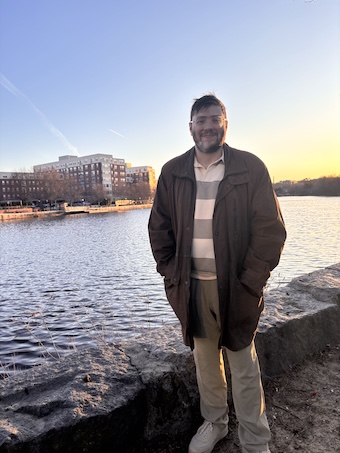
From Public Parks to Nightclubs: Non-normative Socialization and Urban Transformation in Pre- and Post-Oil Qatar
With the support of the Mandel Research Grant, I will analyze photographs and maps from the Qatar National Archives, housed in the Qatar National Library, to examine the infrastructural landscape of pre-oil Qatar. By studying the design of neighborhoods, public spaces such as markets and parks, and residential structures, I aim to trace how the advent of oil wealth reshaped Qatar’s urban environment. This research will explore how new infrastructures—hotels, nightclubs, and apartment buildings—emerged as spaces of transgression, facilitating non-normative socialization. By situating these developments within the broader context of the petro-economy, my project investigates the intersections of economic power, urban transformation, and non-normative subjectivities in Qatar.
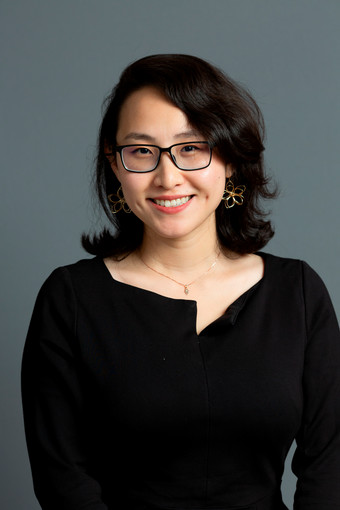
Navigating Difference: Jewish Adoption Agencies and Transracial Adoption in the United States
My dissertation explores the intersection of race and religion in adoption practices among Jewish Americans. During the 20th century, the Jewish infertility rate rose while the number of adoptable white children in the United States declined. By the early 1950s, both social workers and state family laws in the Middle and North Atlantic regions carried out the practice of placing adoptees in families of the same faith as their birth mother. Because very few Jewish children were born out of wedlock, this legal barrier made it extremely difficult for childless Jewish couples to adopt across religious line. Focusing on Louis Wise Services, a Jewish-affiliated adoption agency in New York, this project examines how the Jewish community responded to these legal and social barriers—particularly through exploring the placement of mixed-race and non-white children in Jewish homes, where religious matching regulations were more flexible. With support from the Mandel Graduate Research Grant, I will visit the Augustus C. Long Health Sciences Library at Columbia University, where archival records will offer critical insight into how religion, race, and adoption policy collectively influenced American Jewish family life.
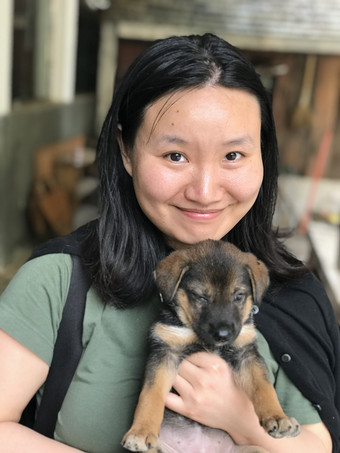
The Care-Scam Paradox and New Ethical Strivings in China’s Senior Supplements Market
This project investigates how senior urbanites in China navigate the complexities of self-care in the new condition where traditional family support systems are shrinking, and state-provided eldercare is insufficient. It explores the local health supplements market as a vital yet contested space—often dismissed by the public as a scam fueled by manipulative sales tactics, yet deeply valued by senior customers who find genuine enjoyment and meaning in their participation. Within this paradox, seniors forge new pathways to well-being, blending self-care practices, peer support, and market-driven solutions. Having endured unspoken hardships during decades of national upheaval, many seniors seek not only longevity and community in these stores, but also spaces for self-healing and quiet recognition of shared life struggles. By examining seniors’ participation in the local health supplements market and the meaningful connection they have forged, the research sheds light on how older adults confront systemic gaps in care and redefine what it means to age with dignity and agency.