Fields with Long Memories: Reading Working Landscapes Across Past and Present
 Professor Charlotte Goodge
Assistant Professor of Anthropology
Farming landscapes are cultural landscapes with long memories. Fields and soils bear the traces of past cultivation, enclosure, drainage, erosion, and repair, even as they remain active sites of contemporary labor and livelihood. Archaeologists have long developed methods for reading these layered landscapes, yet such techniques are increasingly intersecting with present-day land management through multispectral and thermal remote sensing. This project asks what becomes visible—conceptually as well as materially—when agricultural land is read simultaneously as historical landscape and contemporary working environment, and how different regimes of evidence reorder interpretive authority over land.
The project reframes archaeological remote sensing not as a technical intervention aimed at improving agricultural practice, but as a humanistic tool for interrogating knowledge, memory, and care in working landscapes. Multispectral and thermal imagery can reveal stress patterns, moisture differentials, and subsurface traces that resonate with long-term histories of land use. At the same time, such images privilege particular temporalities and forms of visibility, raising ethical and epistemological questions about what counts as evidence and who is authorized to interpret it. By placing sensor-derived imagery in dialogue with historical cartography and landscape archives, this research examines how different ways of seeing land translate, overlap, and sometimes conflict.
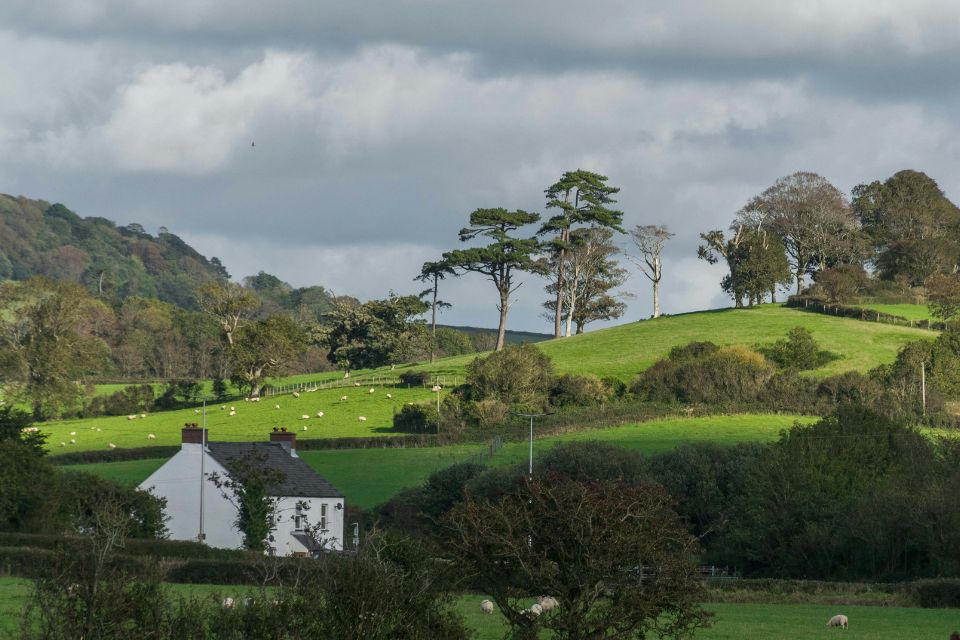
The study will focus on a single Cornish working landscape with access to multiple cultivated fields and exceptionally rich documentary coverage. Although the site comprises twelve accessible fields, the project will concentrate on three carefully selected case-study fields that differ in soil composition, topography, drainage, and boundary history. This selective approach allows for interpretive depth rather than technical breadth and keeps the project tightly bounded within the grant period.